The country’s highway network is expanding fast, and every day millions of vehicles travel long distances.
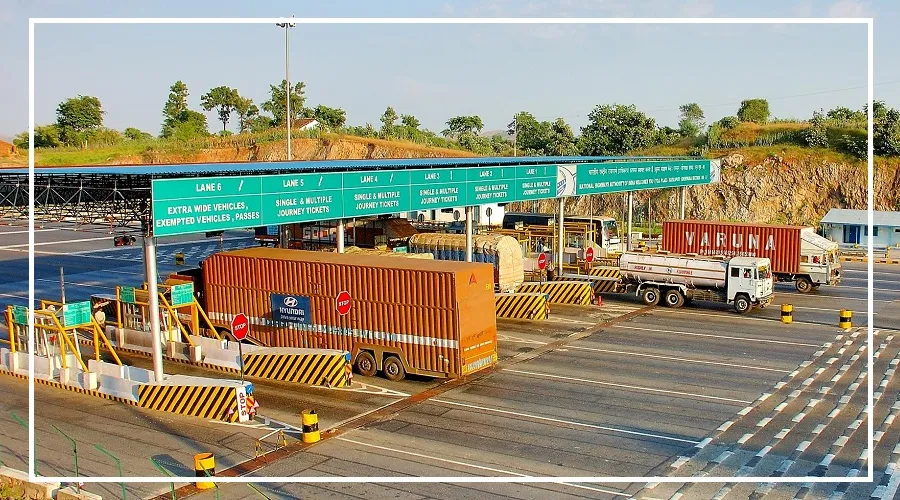
But toll plazas often slow down these journeys.
Even after FASTag, long queues, traffic jams, and delays are still common on many highways.
To solve this problem, a new technology-driven toll system is now being introduced.
India has launched its first barrier-free toll system in Surat, Gujarat.
With this new setup, vehicles will no longer need to stop at toll plazas.
Toll charges will be deducted automatically while vehicles keep moving, making highway travel smoother and faster.
Toll Collection Without Stopping Vehicles
Under the new system, traditional toll barriers are completely removed.
High-resolution cameras installed on the road scan the number plate of every passing vehicle.
Using automatic number plate recognition (ANPR) technology, the system identifies vehicles instantly.
Even vehicles without FASTag will not be missed.
If a vehicle passes without paying, the system records it as a toll violation and sends an e-challan directly to the vehicle owner.
Radar and lidar-based cameras provide 360-degree monitoring, and all data is sent in real time to the control room and NHAI servers.
This ensures that no vehicle can avoid toll payment.
Similar technology is already in use in countries like Dubai, the United States, and Australia.
What Happens If Your FASTag Has Low Balance?
If your vehicle has a FASTag but the balance is low or the tag is blacklisted, the system will still detect it.
Such vehicles are marked as defaulters, and the owner receives alerts through SMS or the FASTag app.
If the FASTag is not recharged within the given time, an e-challan will be issued.
The system also closely monitors vehicles that try to deliberately evade toll payments, making it very difficult to escape detection.
A Faster Future for Highway Travel
This barrier-free toll system is expected to expand to other highways across the country in the future.
By removing toll booths and reducing congestion, it promises faster travel, less fuel wastage, and a more convenient driving experience for everyone.