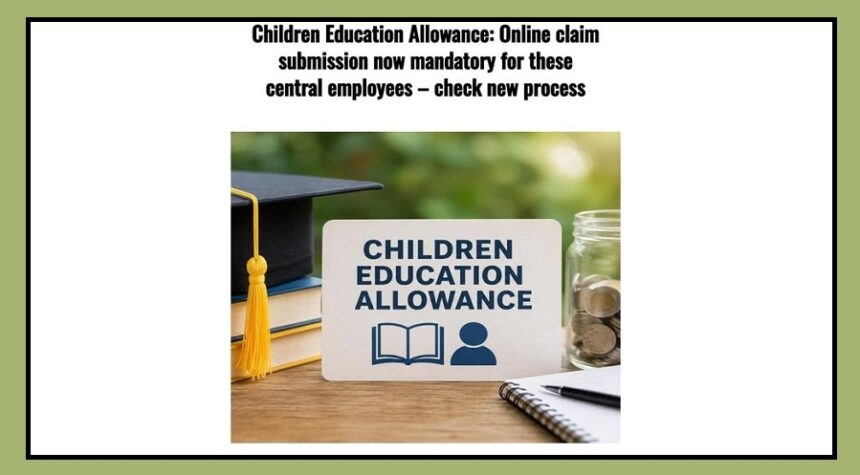
The Department of Posts has introduced a new digital system for Children Education Allowance (CEA) claims.
From now on, eligible employees will have to submit their claims online through the APT 2.0 platform.
The move is aimed at making the claim process faster, more transparent, and easier to track.
However, employees should note that physical documents are still required along with the online application.
What Has Changed?
According to an Office Memorandum issued on May 23, 2026, CEA claims can now be submitted, processed, and tracked online through APT 2.0.
The new system allows employees to:
Submit CEA claims online
Upload supporting documents
Track claim status
Complete verification digitally
Receive approvals through the system
Process payments more efficiently
Reduce errors through automated checks
The Department of Posts has also issued a Standard Operating Procedure (SOP) to help employees and officials use the new platform smoothly.
What Is APT 2.0?
APT stands for Accounts and Payroll Technology.
APT 2.0 is the Department of Posts’ digital platform used for salary processing, reimbursements, employee benefits, and other financial transactions.
Earlier, CEA claims involved a lot of paperwork and manual processing.
With the new online system, employees can submit claims digitally and track their progress more easily.
The department believes this will improve efficiency and help reduce delays.
Online Filing Is Mandatory, But Paperwork Continues
Although the claim process has become digital, employees cannot completely avoid paperwork yet.
The department has made online submission through APT 2.0 mandatory.
At the same time, employees must continue submitting physical copies of the claim form and supporting documents to the concerned office or Drawing and Disbursing Officer (DDO).
The existing claim format prescribed by the Department of Personnel and Training (DoPT) will continue to be used.
In short, employees currently need to complete both online and offline submission processes.
What Is Children Education Allowance (CEA)?
Children Education Allowance is a reimbursement benefit provided to Central Government employees to help cover a part of their children’s education expenses.
The benefit can generally be claimed for up to two children and is available for studies from nursery to Class 12, subject to government rules.
After submitting the required documents, employees can receive reimbursement for eligible educational expenses.
How Much CEA Can You Claim?
Under the current rules based on the Seventh Pay Commission recommendations, employees can claim up to ₹2,250 per month per child.
This means:
Up to ₹27,000 per year for one child
Up to ₹54,000 per year for two children
The reimbursement amount may be revised in the future whenever Dearness Allowance (DA) crosses specified limits set by the government.
Who Is Eligible for CEA?
The allowance is available to Central Government employees whose children study in recognized educational institutions.
Special provisions are also available in certain cases involving children with disabilities, where higher reimbursement limits may apply.
Employees must submit the required certificates, fee receipts, and other supporting documents while filing their claims.
Tax Rules You Should Know
Many employees get confused about the tax treatment of CEA.
There are actually two different provisions:
The first is the Children Education Allowance exemption under income tax rules, which allows an exemption of ₹100 per month per child for up to two children.
The second is the Children Education Allowance reimbursement provided to Central Government employees under service rules.
This is an employment benefit and follows separate government regulations.
Employees should consult their department’s accounts or finance section for guidance on the tax treatment of their specific claims.
Why This Change Matters
The new digital process is expected to make CEA claim management more organized and transparent.
Online submission through APT 2.0 will help create centralized records, improve tracking, speed up verification, and reduce paperwork-related errors.
At the same time, the continuation of physical document verification ensures that proper records are maintained while the department gradually moves towards a more technology-driven system.
For Central Government employees claiming education expenses for their children, understanding this new process will be important to avoid delays in reimbursement.