The Central Government has announced a major step to make medicines safer and curb the sale of fake drugs in India.
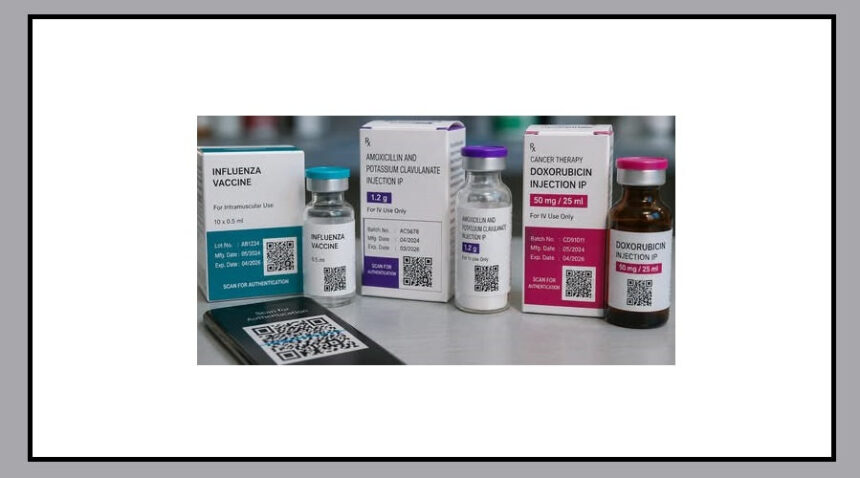
QR codes will now be mandatory on vaccines, antimicrobials, anti-cancer medicines, and narcotic and psychotropic drugs.
The move is aimed at improving transparency in the pharmaceutical supply chain and helping patients verify whether a medicine is genuine.
QR Codes Now Mandatory on Critical Medicines
The Ministry of Health and Family Welfare has amended the Drugs Rules, 1945, bringing these medicines under Schedule H2.
Earlier, QR code-based tracking was mandatory only for the country’s top 300 pharmaceutical brands.
Now, the rule has been expanded to cover medicines that are more vulnerable to counterfeiting and misuse.
Manufacturers will have to print or affix QR codes on medicine packs.
If there is not enough space on the primary pack, the QR code can be placed on the secondary packaging.
What Information Will the QR Code Show?
The QR code will act as a digital identity for every medicine.
Anyone, including regulators, distributors, healthcare professionals, and consumers, will be able to scan it and verify important details.
The QR code will include:
Product identification number
Generic and brand name
Manufacturer’s details
Batch number
Manufacturing and expiry dates
Licence number
Other important product information
This will make it much easier to identify genuine medicines and trace them throughout the supply chain.
How Will This Help Patients?
Fake and low-quality medicines continue to be a serious concern in India.
Such medicines can fail to treat diseases properly and may even harm patients.
With QR code verification, authorities will be able to track medicines more effectively and reduce the circulation of counterfeit drugs.
The new system is also expected to strengthen efforts to control counterfeit antimicrobial medicines, which play an important role in the fight against antimicrobial resistance.
Implementation Will Be Done in Phases
The government has given pharmaceutical companies enough time to implement the new system.
The rollout schedule is as follows:
July 2027: QR codes become mandatory for vaccines, anti-cancer medicines, and narcotic and psychotropic drugs.
July 2028: The rule will be extended to antimicrobial medicines.
A Major Step Towards Safer Medicines
The expanded QR code system is expected to improve patient safety and increase confidence in India’s healthcare system.
By allowing real-time verification of medicines and improving traceability, the government aims to build a more transparent and secure pharmaceutical supply chain while making it harder for counterfeit medicines to reach patients.