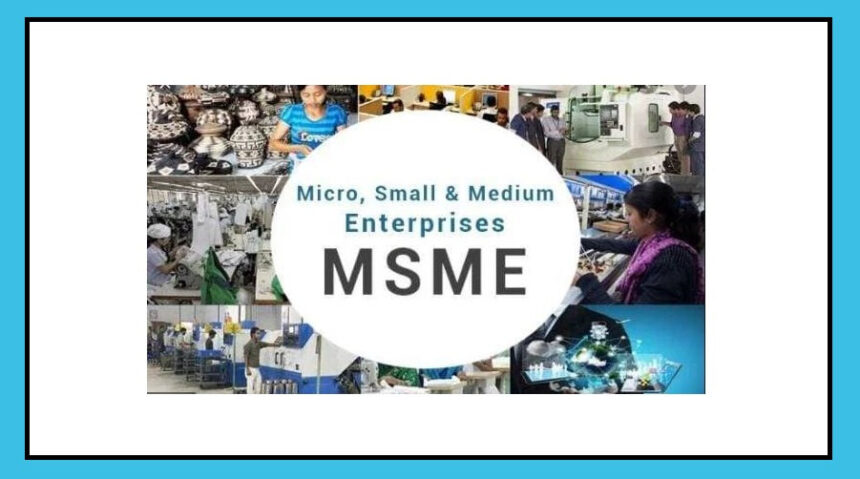
The Union Government has announced key updates for Micro, Small, and Medium Enterprises (MSMEs), aiming to strengthen small businesses, improve access to credit, and support long-term growth.
The changes were highlighted by Finance Minister Nirmala Sitharaman during the Union Budget 2025–26 presentation on February 1, 2025.
These new measures focus on expanding MSME eligibility limits and introducing easier financial tools like customized credit cards for micro businesses.
MSME Classification Limits Increased for Faster Growth
One of the major announcements is the revision of MSME classification limits.
The investment and turnover thresholds for MSMEs will now be increased by 2.5 times and 2 times respectively.
This means more businesses will now qualify as MSMEs and can access government benefits and support schemes.
The government stated that this move will help businesses scale up more easily, adopt new technology, and access better funding opportunities.
Currently, India has over 1 crore registered MSMEs, employing around 7.5 crore people.
These enterprises contribute nearly 36% of India’s manufacturing output and account for about 45% of total exports, making them a key pillar of the economy.
Customised Credit Cards for Micro Enterprises
To further support small businesses, the government has introduced customized credit cards for micro enterprises registered on the Udyam portal.
Each card comes with a credit limit of up to ₹5 lakh and is designed to help business owners manage their daily financial needs more efficiently.
A major goal of this initiative is to help entrepreneurs separate personal and business expenses, ensuring better financial discipline and easier accounting.
Key Benefits of MSME Credit Cards
These SME credit cards are designed to support day-to-day business operations.
Business owners can use them to purchase raw materials, buy equipment, and cover regular operating expenses without financial stress.
The cards also help track spending, making it easier for businesses to monitor cash flow and control costs.
In addition, many of these cards offer extra benefits such as cashback, reward points, flexible repayment options, and even short-term loans.
Some cards provide an interest-free period of 45 to 50 days, giving businesses temporary financial relief.
EMI options with competitive interest rates are also available, making repayment more manageable.
The government expects to distribute around 10 lakh such cards in the first year itself.
How MSMEs Can Apply for These Cards
Several major banks in India, including SBI, HDFC Bank, Axis Bank, Kotak Mahindra Bank, Standard Chartered, and IndusInd Bank, already offer credit cards designed for MSMEs.
Interested applicants can contact these banks directly or visit their official websites for detailed eligibility criteria and application procedures.
Generally, a good credit score is required, typically in the range of 640 to 699 or higher.
A strong repayment history and no loan defaults also improve approval chances.
Since each bank follows its own evaluation process, terms and conditions may vary depending on the applicant.
With these reforms, the government aims to empower small businesses, improve credit access, and push India’s MSME sector towards stronger growth and greater global competitiveness.