


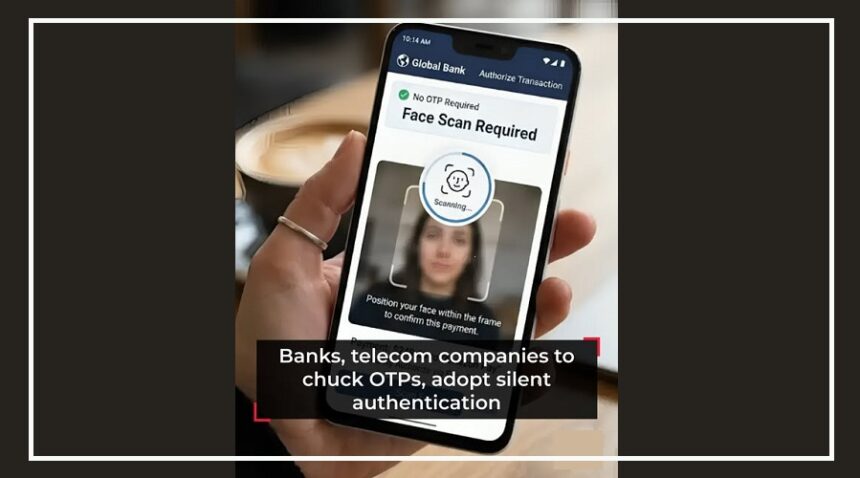
OTP (one-time password) has long been the go-to method for verifying customers.
But cyber fraudsters often steal OTPs to commit fraud.
To tackle this, banks and telecom companies are now working on “silent authentication” technology.
This system checks if the mobile number linked to a bank account is the same as the one currently active on the phone.
If a mismatch is found, the customer can be blocked from performing banking transactions in real time.
This method will also work on e-SIMs, making it harder for fraudsters to steal OTPs.
Extra Layer of Protection
Silent authentication acts as an extra layer of verification.
Currently, cyber criminals use SIM cloning and eSIM swapping to intercept OTPs.
With silent authentication, banks and telecom providers can detect if a SIM card is not active in the registered user’s phone.
This makes fraudulent attempts far more difficult.
Sameer Shetty from Axis Bank explains, “We’re working with telecom companies to trial silent authentication.
If a customer logs into a banking app but their mobile number doesn’t match the registered number, the telecom network alerts us.
This helps detect fraud without bothering the customer.”
OTPs Might Move to Apps
To further improve security, telecom companies are exploring sending OTPs through their apps instead of traditional SMS.
SMS-based OTPs are more vulnerable to fraud, while app-based OTPs are harder to hack.
Banks have also started using Aadhaar-based face authentication and in-app OTP generation as part of updated two-factor authentication rules from April 1.
Experts believe this technology will reduce reliance on SMS OTPs, prevent transaction failures, and increase security.
According to Nitin Singhal from Sinch, silent authentication will help banks prevent fraud, comply with regulations, and gain customer trust.