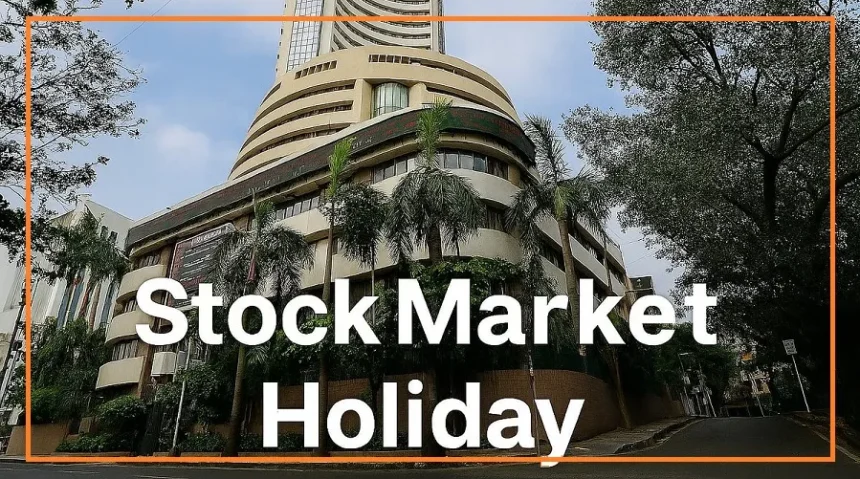
Indian stock markets are set for a three-day break this week due to Bakrid (Eid al-Adha) and the regular weekend closure.
The National Stock Exchange (NSE) and Bombay Stock Exchange (BSE) will remain closed on Thursday, 28 May for Bakrid.
With Saturday and Sunday already non-trading days, investors will see no market activity for three consecutive days.
The shutdown comes at a time when markets have been moving amid global uncertainty and fluctuating crude oil prices.
Which Segments Will Be Closed?
The market holiday will impact all major trading segments on the exchanges.
This includes:
Equity markets
Equity derivatives
Currency derivatives
Securities lending and borrowing (SLB)
In simple terms, no buying or selling activity will take place across NSE and BSE during this period.
Commodity trading on MCX may also see partial closure, with the morning session likely shut while the evening session could operate depending on the exchange’s schedule.
Why the Market Is Closing
The closure is part of the annual trading holiday calendar announced by stock exchanges.
Markets in India remain shut on:
National holidays
Major festivals
Weekly weekends
Bakrid is one of the key holidays that leads to a scheduled trading break every year.
According to reports, investors are also entering this break after a volatile trading phase driven by:
Global market uncertainty
Foreign investor activity
Movement in crude oil prices
Because of this, traders are closely watching global signals ahead of the next trading week.
What Investors Should Keep in Mind
With a three-day break in trading, investors and traders are advised to plan ahead.
Key points to remember:
No trading or settlements during the holiday period
Fund transfers and positions should be planned in advance
Volatility may return once markets reopen
Long breaks often lead to stronger reactions when trading resumes, depending on global cues.
Final Outlook
The upcoming holiday gives markets a short pause after recent fluctuations.

When NSE and BSE reopen next week, investors will be watching global trends, oil prices, and domestic economic signals for direction.
For now, traders will have to wait for three days before the next round of market action begins.