The Indian automobile sector is set to see a major change starting April 1, 2026. India has already achieved its goal of 20% ethanol blending in petrol.
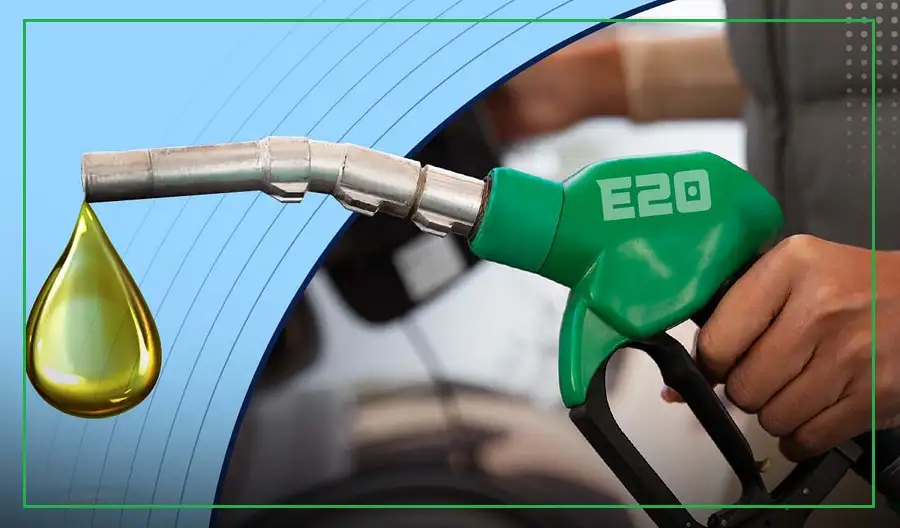
The government has officially instructed all oil marketing companies to sell only petrol that contains 20% ethanol (E20) and has a minimum RON value of 95 across all states and union territories.
Samir Somaiya, Chairman and Managing Director of Godavari Biorefineries Limited (GBL), has now suggested that India should aim for even higher blending levels, up to E50 (50% ethanol).
Somaiya welcomed the decision to make E20 petrol mandatory nationwide. He said this move is a strong positive step in India’s energy transition journey.
He also noted that the government had originally set the E20 target for 2030, but the country achieved it much earlier.
According to him, steady government policies and strong participation from the industry helped India reach 20% ethanol blending by 2025.
Why India Should Move Toward E50 Blending
Sharing his vision for E50 fuel, Somaiya said that E20 has now become the national baseline, and moving to E50 is achievable. He explained that there are several ways to reach this level.
First, the ethanol industry has already shown strong capacity and resilience, which can support higher blending levels.
Second, India urgently needs to promote flex-fuel vehicles (FFVs) and give them the same policy support as electric vehicles (EVs).
He emphasized that if India is serious about reducing dependence on fossil fuels, FFVs must be placed on an equal policy platform with EVs.
Need for Policy Support for Flex-Fuel Vehicles
Somaiya is essentially calling for government incentives and policy support for flex-fuel vehicles. Incentives can help new technologies grow in their early stages.
Once the market becomes stable and mature, such incentives are usually reduced or removed. This pattern has already been seen with electric vehicles, and similar support may also be given to hybrid and flex-fuel vehicles in the future.
Ethanol and Blended Fuels Key to Net-Zero Goals
Somaiya believes that electrification alone cannot remove fossil fuels completely. A full shift only to electric vehicles will not be enough for India to achieve its net-zero target. Blended fuels will play an important role in this transition.
He also pointed out that agriculture, regenerative farming, and bio-based value chains will support this shift. Ethanol burns cleaner than regular petrol,
and ethanol-blended petrol produces fewer emissions than pure petrol. As the blending percentage increases, emissions decrease. Therefore, E50 fuel is cleaner than E20.