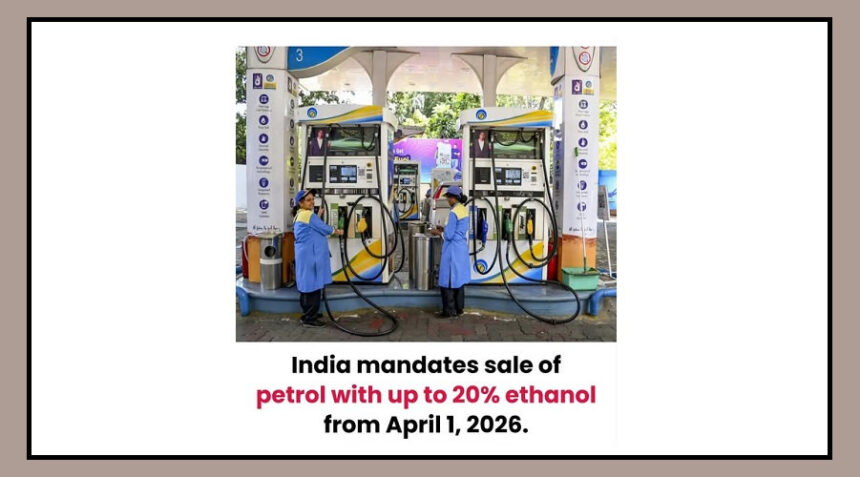
Starting April 1, motorists across India will notice an important change.
The central government has directed all states and union territories to sell petrol blended with up to 20% ethanol, commonly known as E20 fuel.
The decision was announced by the Ministry of Petroleum and Natural Gas.
According to the government, this step will reduce India’s dependence on imported crude oil, support farmers, and help the environment.
What Exactly Is Changing?
Oil marketing companies have been instructed to supply petrol blended with 20% ethanol across the country.
The fuel must meet standards set by the Bureau of Indian Standards, including a minimum Research Octane Number (RON) of 95.
RON measures fuel quality.
A higher number means the fuel can handle more compression in the engine without causing knocking, which can damage engines.
Ethanol has a high octane rating of around 108.
When blended with petrol, it improves knock resistance and overall fuel performance.
Why Is Ethanol So Important?
Ethanol is mainly produced from sugarcane, corn, and other grains.
It is considered a cleaner fuel compared to pure petrol because it helps reduce carbon emissions.
At the same time, it increases demand for agricultural produce, benefiting farmers.
The government says that since 2014-15, the ethanol blending program has helped save more than ₹1.40 lakh crore in foreign exchange by reducing crude oil imports.
India achieved its 10% ethanol blending target in June 2022, ahead of schedule.
The 20% blending target for 2025-26 is now being rolled out nationwide.
What Does This Mean for Vehicle Owners?
If your vehicle was manufactured after 2023, it is likely designed to run on E20 fuel without any major issues.
However, older vehicles may see a slight drop in fuel efficiency, possibly between 3% and 7%.
In some cases, rubber and plastic components in older engines could be affected over time.
The government and automobile industry say the transition will be gradual.
The aim is to ensure that consumers do not face a sudden financial or technical burden.
From April 1, E20 petrol will become the new normal at fuel stations across India.
It marks a significant step in the country’s push toward cleaner energy and reduced oil imports.