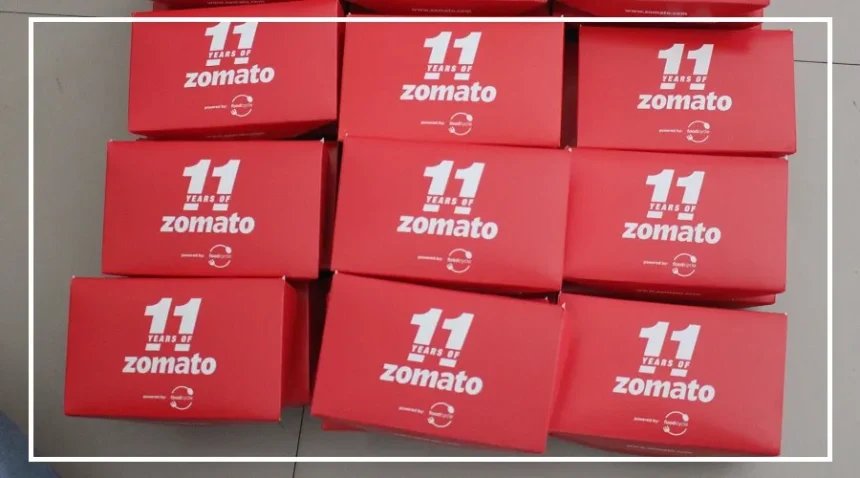
Zomato cash on delivery fee has increased the cost of ordering food for customers who choose to pay when their order arrives.
The company will now levy an additional charge for cash-on-delivery orders, over and above its existing platform fee and other applicable charges.
According to a Moneycontrol report, Zomato’s bill summary now separately shows a pay-on-delivery fee when customers select the cash-on-delivery option.
While the new charge is described as ₹5, some users have reportedly seen fees ranging from ₹7 to ₹20.
Zomato Cash on Delivery Fee Appears Separately
The pay-on-delivery charge is added separately to the customer’s bill. This means customers choosing cash payment may have to pay more than those using other payment methods, depending on the fee shown for their order.
The additional charge comes on top of the platform fee already collected by Zomato. Customers may also have to pay restaurant packaging charges and GST, where applicable.
For customers who frequently order food and prefer cash payments, even a small additional fee can increase the overall cost of regular orders.
Zomato Faces Growing Competition
The new fee comes at a time when competition in India’s food-delivery market is increasing. Swiggy continues to operate as a major player, while newer services are also trying to attract customers.
Rapido’s Ownly is gaining attention among users, while Flipkart is testing its food-delivery service. Startup Swish has also raised funding as it looks to expand in the food-delivery space.
With more options becoming available, food-delivery companies are facing increasing competition for customers and orders.
Pricing and additional charges can therefore play an important role in how customers choose between platforms.
₹5 Fee Could Add Significant Revenue
The additional charge may appear small on an individual order, but it could become a sizeable source of revenue because of Zomato’s large order volume.
The company handles around 2.3 million to 2.5 million food orders every day. If a ₹5 additional fee were collected on every order, it would amount to roughly ₹11.5 million to ₹12.5 million in additional revenue per day.
On an annualised basis, that works out to approximately ₹4.2 billion to ₹4.56 billion. The actual amount collected could differ depending on the orders on which the fee is applied and the charges shown to individual customers.
How Are Zomato Shares Performing?
Zomato’s parent company, Eternal, also saw movement in its shares. On Friday, the stock closed at ₹323 on the BSE, gaining 0.78 percent during the session.
The stock has gained around 37 percent over the past three months and 44 percent over the past six months. However, over the past one year, Eternal’s shares have delivered a negative return of 1.54 percent.
Over a two-year period, the share price has risen 18 percent, while the three-year gain stands at 218 percent.
The company’s growing food-delivery business and increasing competition remain important factors for investors to watch. However, past stock performance does not guarantee future returns.
This article is for information purposes only and is not investment advice. The stock market is subject to risks, and investors should seek expert advice before making investment decisions.