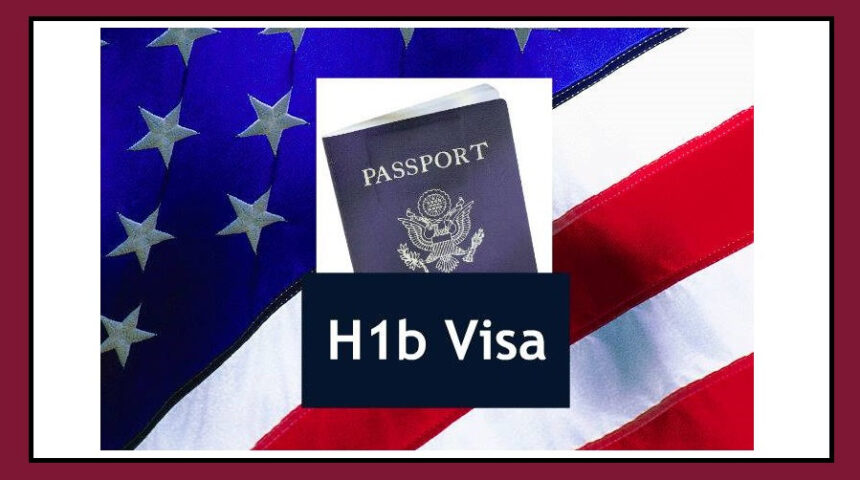
A new proposal from the United States Department of Labor could soon change how much American companies must pay foreign workers.
The rule targets two major immigration pathways — the H-1B visa and the PERM labor certification process.
While the full details are not yet public, the proposal has already cleared an important review stage in Washington.
That means it is moving forward — but it is not final yet.
What Has Happened So Far?
The proposal was reviewed by the Office of Management and Budget (OMB).

This step is required before any major federal rule is officially announced.
The next step is publication in the Federal Register.
Once that happens, the full details will become public, and people will be able to send comments and feedback.

Until then, much of the exact impact remains unclear.
What Are “Prevailing Wages” — And Why Do They Matter?
“Prevailing wages” are the minimum salaries that US employers must pay foreign workers.
These wages depend on the job role and the location.
If the government changes how these wages are calculated, it can directly affect:
How much companies must pay foreign employees
Who qualifies under salary requirements
Whether companies decide to sponsor foreign workers at all
Experts believe the proposal could raise salary requirements across several job categories.
If that happens, hiring foreign professionals may become more expensive for US employers.
Not Final Yet — Here’s What Happens Next
Even though the proposal has cleared federal review, it is not law yet.
Once published, there will be a public comment period, usually lasting 30 to 60 days.
During this time, companies, individuals, and advocacy groups can share their views.
Only after reviewing these comments can the Labor Department decide whether to finalise the rule.
A Look Back: Why This Sounds Familiar
This is not the first time prevailing wage rules have been under scrutiny.
In 2021, during the administration of Donald Trump, the Labor Department finalised a rule that significantly increased wage levels — in some cases by 40% to 100%.
However, that rule faced legal challenges and was later dropped under Joe Biden’s administration.
Now, it is unclear whether the current proposal is the same rule returning in a new form — or an entirely new version.
Why This Is Important for Indian Professionals
Indian nationals form the largest group of H-1B visa holders.
According to the US Citizenship and Immigration Services, 71% of all approved H-1B applications in fiscal year 2024 went to Indian beneficiaries — about 2.8 lakh approvals.
Because of this large share, any increase in salary requirements could strongly impact Indian professionals, especially those in technology and healthcare.
What Could Happen Next?
If the rule moves quickly through the comment process, the revised wage structure could start affecting H-1B applicants selected in the 2027 season.
For now, employers and foreign professionals are waiting for the full details.
One thing is clear: any change in wage rules could reshape hiring decisions, visa sponsorship strategies, and opportunities for thousands of skilled workers.