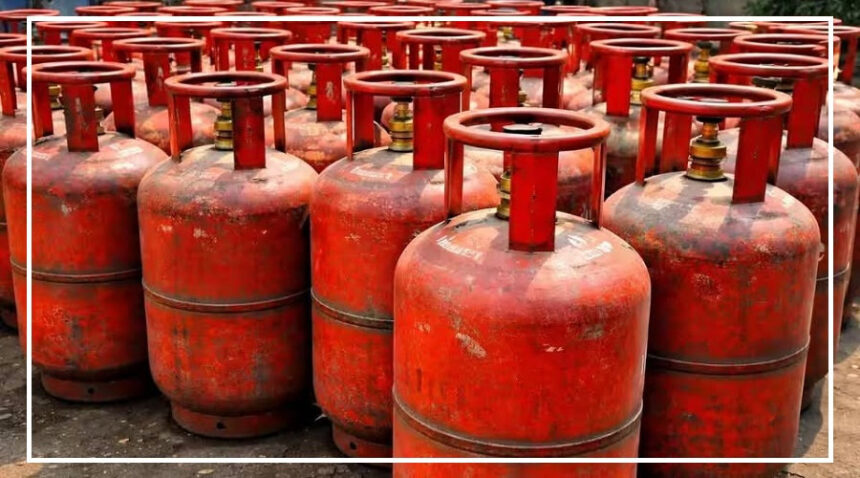
The government has taken several urgent steps to manage LPG shortages after supply disruptions caused by tensions in West Asia.
One of the key changes is the extension of the LPG cylinder booking cycle for rural consumers.
Earlier, rural households could book a new LPG cylinder every 25 days. Now, they will be able to place a new booking only after 45 days.
The move is aimed at ensuring that limited cooking gas supplies are distributed more evenly across the country.
According to Sujata Sharma, Joint Secretary (Marketing) at the Ministry of Petroleum and Natural Gas, India has not faced a situation like this before.

The supply chain has been affected following the disruption of shipments through the Strait of Hormuz, a crucial route for global energy supplies.
LPG Bookings Jump as Supply Fears Grow
Demand for LPG cylinders has surged as people worry about future shortages.
Officials say daily LPG bookings have risen sharply to about 80 lakh cylinders, compared with the usual 60 lakh bookings per day.
However, actual deliveries remain around 55 lakh cylinders daily, creating pressure on the system.
To reduce this pressure, the government is encouraging businesses to use alternative fuels instead of LPG.
Petroleum Minister Hardeep Singh Puri told Parliament that fuels such as kerosene and fuel oil are being made available through retail outlets and the Public Distribution System (PDS).
Restaurants and hotels have also been allowed to temporarily switch to biomass, coal, kerosene, and RDF pellets to reduce their dependence on LPG.
Temporary Fuel Options for Restaurants and Hotels
The Ministry of Environment, Forest and Climate Change has advised state pollution control boards to allow hospitality businesses to use these alternate fuels for one month.
This step will help restaurants and hotels continue operations while freeing up more LPG cylinders for household use.

At the same time, the government has increased kerosene supply to states.
additional 48,000 kilolitres of kerosene will be distributed, on top of the 100,000 kilolitres that states normally receive every quarter.
State governments will play a key role in identifying beneficiaries and ensuring proper distribution.
Government Boosts Domestic LPG Production
Along with managing demand, the government is also trying to increase domestic LPG production.
Refineries have been instructed to maximise LPG output by diverting hydrocarbon streams such as propane and butane toward cooking gas production. As a result, LPG output has increased by about 28% in the past week.
Under the LPG Control Order issued on March 8, refineries must supply these streams exclusively to state-run oil marketing companies to strengthen domestic LPG availability.
Officials clarified that the goal is not to restrict consumption but to prevent black marketing and diversion of cylinders.
Stricter Monitoring to Prevent Black Marketing
The government has also tightened monitoring of LPG deliveries.
About 20% of the average monthly commercial LPG consumption will now be allocated to hotels, restaurants and other businesses through oil marketing companies in coordination with state governments.
Another important step is expanding the Delivery Authentication Code (DAC) system.
This system uses a one-time code to confirm cylinder delivery and prevent diversion.
Earlier, the system covered about 50% of consumers. Now, it has been expanded to around 90%.
India’s Heavy Dependence on LPG Imports
India relies heavily on imports to meet its LPG demand.
The country requires around 31–32 million tonnes of LPG every year, and 60–65% of this is imported.
Most of these imports come from West Asian countries such as Saudi Arabia, Qatar, and the United Arab Emirates.
According to the Petroleum Planning and Analysis Cell, India produced about 12.8 million tonnes of LPG in FY25, while consumption reached 31.3 million tonnes.
In the current financial year, LPG consumption had already reached 30.85 million tonnes by January, with two months still remaining.
India Looking for New LPG Suppliers
To stabilise supplies, India is now sourcing LPG cargoes from multiple countries, including the United States, Canada, Norway, Algeria, and Russia.
The government has also reassured people that other fuels remain available.
Stocks of petrol, diesel, kerosene, aviation turbine fuel, and fuel oil are currently sufficient.
Even though LNG imports from Qatar faced disruptions due to force majeure, alternative shipments from other suppliers are arriving regularly.
According to Hardeep Singh Puri, large LNG cargoes are reaching India almost daily through alternative supply routes, ensuring that the country’s energy needs remain secure even if the conflict continues.