
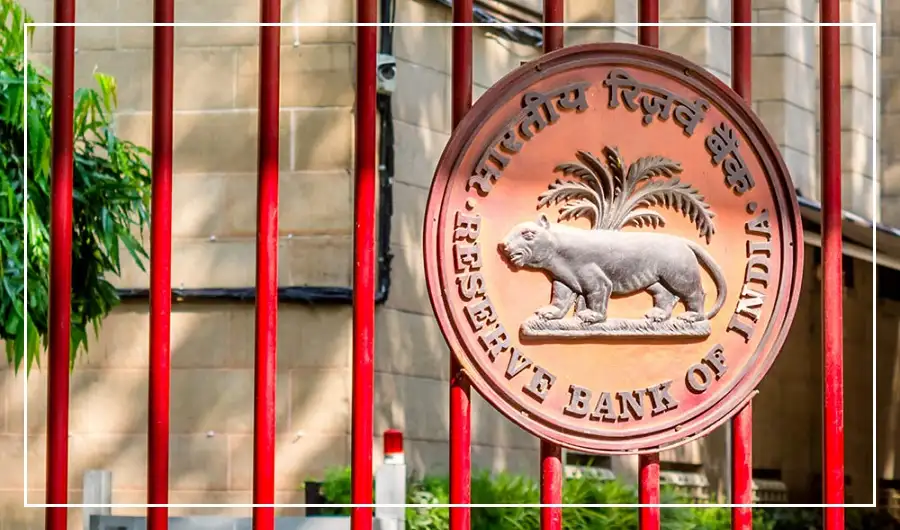
The Reserve Bank of India (RBI) has introduced new rules for deposit accounts, including savings accounts and fixed deposits (FDs), to simplify interest calculations and protect customer interests.
These rules aim to bring transparency and uniformity across all banks in India.
Uniform Interest on Savings Accounts
Under the new RBI guidelines, all banks must pay the same interest rate on savings account balances up to ₹1 lakh.
For balances above ₹1 lakh, banks can offer different rates.
Interest will now be calculated based on the daily closing balance and credited to accounts once every three months.
This ensures clear and predictable interest earnings for customers.
Fixed Deposit Rules Simplified
One major change concerns fixed deposits.
According to the new regulations:
No interest will be paid if an FD is broken before the minimum period specified by the bank.
The RBI sets a minimum standard term of seven days, but banks can choose a longer term.
If an FD is broken after the minimum period, interest will be paid only for the duration the money remained in the bank.
Higher pre-decided rates for the full term will not apply.
If an FD matures on a non-business day, interest will still be calculated for that day, and payment will be made on the next working day.
Banks are now required to clearly communicate all FD-related terms, including minimum tenure and penalties for early withdrawal.
Uniform Rates and Restrictions
FD rates will be the same across all branches.
There will be no negotiation between customers and banks.
Higher interest rates may apply only to very large deposits, such as FDs of ₹3 crore or more.
Banks cannot offer lotteries, prizes, foreign trips, or illegal commissions to attract deposits.
Misleading advertisements showing only compound interest are also banned.
Certain organizations and political parties are restricted from opening savings accounts.
Additional Interest Benefits
Bank employees, retired staff, and some family members may get 1% extra interest on FDs and savings accounts.
Separate higher-interest FDs may be offered for senior citizens.
If a time deposit is not withdrawn after maturity, interest will be paid at the lower of the savings account rate or the original TD rate.
Current accounts will not earn interest, except in the event of the account holder’s death, where interest will be paid at the savings account rate until the payment is made.
NRI Accounts: NRE and NRO
The RBI has also set rules for non-resident Indians (NRIs):
Interest rates on NRI deposits cannot exceed those for domestic deposits.
Minimum tenure: 1 year for NRE accounts, 7 days for NRO accounts.
Senior citizens or bank staff will not get additional interest on NRI/NRO deposits.
NRE accounts are used by NRIs to keep their foreign income in India and convert it into rupees.
NRO accounts help NRIs manage income earned in India, such as rent, dividends, or pensions.
These new RBI rules aim to simplify banking, protect customers, and ensure uniformity across all banks, making it easier for everyone to understand interest rates on savings and fixed deposits.