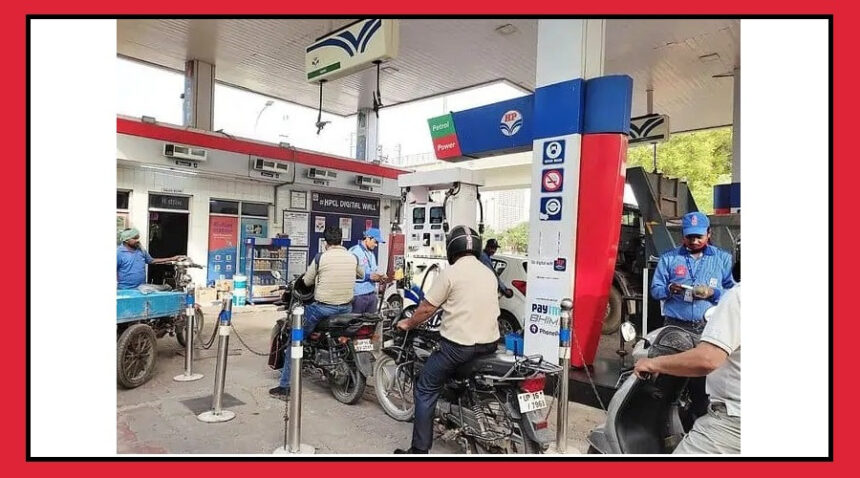
Private fuel companies in India have started increasing petrol and diesel prices, putting pressure on consumers.
Companies like Shell India and Nayara Energy have already raised fuel rates due to rising global crude oil prices.
In Bengaluru, petrol prices have gone up sharply:
Regular petrol: ₹119.85 per litre
Premium petrol: ₹129.85 per litre

Diesel prices have seen an even bigger jump:
Regular diesel: ₹123.52 per litre
Premium diesel: ₹133.52 per litre

Prices may vary in different cities because of local taxes.
Why Are Fuel Prices Increasing?
The main reason behind the price hike is the sharp rise in global oil prices.
Tensions in West Asia, especially involving Iran, have pushed crude oil prices higher.
In fact, Brent crude has surged around 60% since late February.
India imports nearly 88% of its crude oil, making it highly dependent on global markets.
Any disruption — especially around key routes like the Strait of Hormuz — directly impacts fuel prices in the country.

Private vs Government Fuel Companies
Private fuel retailers are raising prices because they are under financial pressure.
Unlike government-owned oil companies:
Private firms do not get compensation for losses
They are forced to pass on higher costs to customers
On the other hand, state-run companies — which control about 90% of the market — have kept prices unchanged for now.
For example, in Delhi:
Petrol: ₹94.77 per litre
Diesel: ₹87.67 per litre
More Price Hikes Coming?
There are concerns that diesel prices could rise even further.
Some reports suggest diesel could reach ₹148 to ₹165 per litre, although there is no official confirmation yet.
Earlier, Nayara Energy had already increased:
Petrol by ₹5 per litre
Diesel by ₹3 per litre
This shows that fuel prices may continue to rise if global oil rates remain high.
What This Means for You
Rising fuel prices can impact daily life by increasing:
Transportation costs
Delivery charges
Prices of goods and services
If global tensions continue, fuel prices may stay high.
Keeping an eye on both international oil trends and local pricing decisions will be important in the coming weeks.