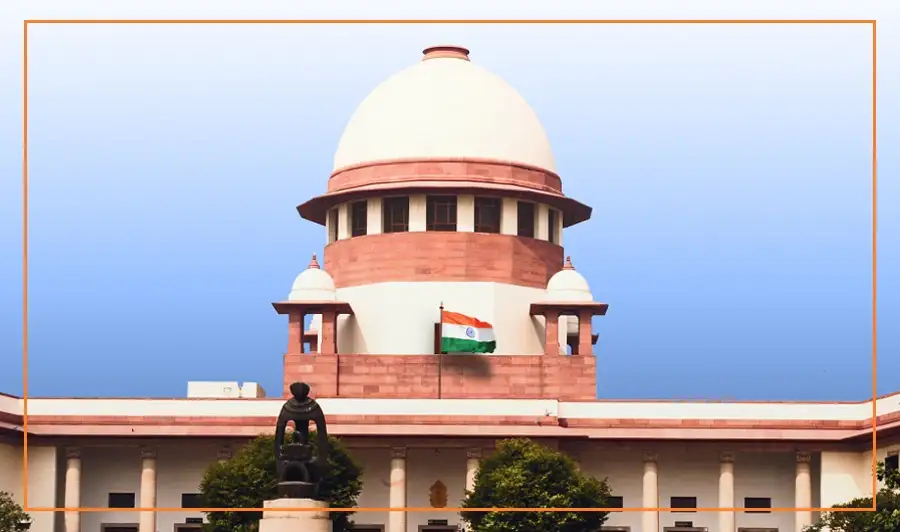
The Supreme Court on Tuesday (December 9) ruled that, according to the Central Civil Services Pension Rules, an employee who resigns from a job loses all past service and cannot claim pension benefits.
A bench of Justices Rajesh Bindal and Manmohan stated:
“The only conclusion that can be drawn is that the employee’s past service is lost when he resigns. Therefore, he will not be entitled to any pension.”
This decision came while denying pension benefits to the legal heirs of a deceased employee who had resigned from the Delhi Transport Corporation (DTC) after serving for about 30 years.
Resignation vs Voluntary Retirement
The legal heirs of the deceased argued that the resignation letter should be treated as voluntary retirement, which would entitle them to pension.

The Court rejected this, explaining that resignation and voluntary retirement are different. Resignation leads to the forfeiture of all previous service, making the employee ineligible for a pension.
The deceased employee had joined DTC as a conductor in 1985. After serving approximately 30 years, he resigned, and his resignation was accepted.
Although he later tried to withdraw his resignation, the request was denied, making the resignation final.

The employee had initially approached the Central Administrative Tribunal (CAT) seeking retirement benefits like pension, gratuity, and leave encashment.
The CAT upheld the employer’s decision to deny these benefits except for the provident fund. The Delhi High Court also supported the CAT’s ruling.
Supreme Court Decision on Benefits
The Supreme Court partly allowed the appeal. The court held that the heirs were entitled to gratuity and leave encashment, but the pension claim was denied.
Citing the case of BSES Yamuna Power Limited v. Ghanshyam Chand Sharma & Ors., (2020) 3 SCC 346, the court clarified that employees who resign are not entitled to pension benefits available to those taking voluntary retirement.
Rule 26 of the Central Civil Services (Pension) Rules, 1972, states that an employee’s previous service is forfeited upon resignation. The court noted:
“The deceased employee resigned on 07.08.2014, and the resignation was accepted on 19.09.2014. His request to withdraw it on 28.04.2015 was rejected. Therefore, the resignation was final.”

The Court also rejected the argument that the employee could claim pension under Rule 48-A because he had nearly 30 years of service.
Rule 48-A allows pension only if an employee gives at least three months’ notice before taking voluntary retirement. Since this notice was not given, the resignation cannot be treated as voluntary retirement.
The Court emphasized that voluntary retirement and resignation are different: voluntary retirement requires three months’ notice, while resignation does not. Without this notice, the employee loses all pension entitlement.