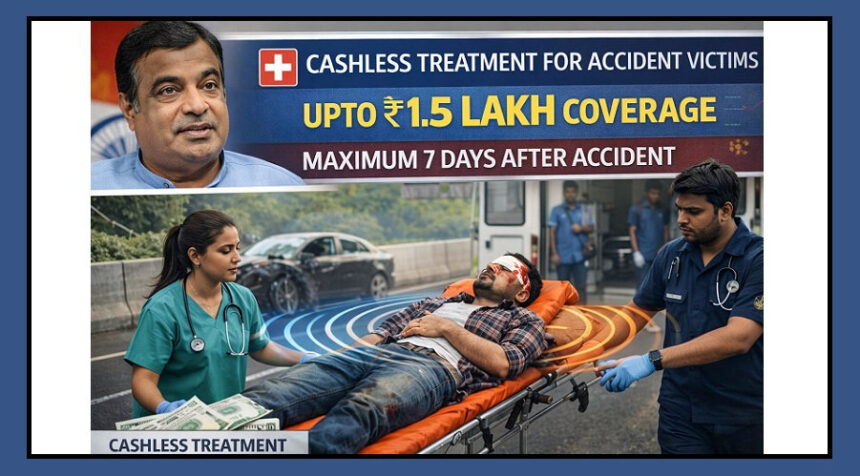
The Government of India is preparing to roll out a new cashless medical treatment scheme for road accident victims.
The initiative aims to provide faster and affordable emergency care, reducing the financial burden on families at a time when every minute matters.
How the Scheme Will Work
Under this scheme, victims of road accidents will receive cashless treatment at empanelled hospitals from the very first day of the accident.
Patients will not need to pay upfront, as hospitals will claim reimbursement directly from the government or its designated agency.
This system is expected to prevent delays in treatment caused by a lack of funds, especially during the critical first hours after an accident.
Who Will Be Covered
The scheme is designed to be broad and inclusive, covering:
All road accident victims, regardless of fault
Patients of all ages

Cases requiring emergency trauma care, hospitalisation, and necessary procedures
The aim is to provide a safety net and reduce the out-of-pocket expenses that often follow serious accidents.
Why the Scheme Is Needed
Road accidents are a major public health challenge in India, resulting in millions of injuries and thousands of deaths every year.
In many cases, victims face crushing medical bills, adding stress to families already dealing with trauma.
The cashless treatment scheme is expected to:
Ensure timely access to emergency care

Prevent delays due to financial constraints
Reduce the economic impact on families
Standardise treatment quality across empanelled hospitals
Implementation and Expected Impact
Once a victim reaches an empanelled hospital, medical staff can start treatment immediately by verifying accident details digitally or with relevant authorities.
Hospitals will then file claims with the government for reimbursement.
Experts say that quick medical intervention improves survival rates and reduces long-term disabilities from road injuries.
By removing the upfront financial barrier, more patients are likely to get rapid and high-quality trauma care.
Supporting Broader Road Safety Goals
The cashless treatment initiative complements the government’s wider road safety efforts, including improving emergency response systems and public health infrastructure.
It also supports national goals to reduce preventable deaths and make healthcare more accessible and affordable.
Authorities are finalising operational details, hospital networks, and policy guidelines to ensure the scheme is swiftly and effectively implemented once launched.