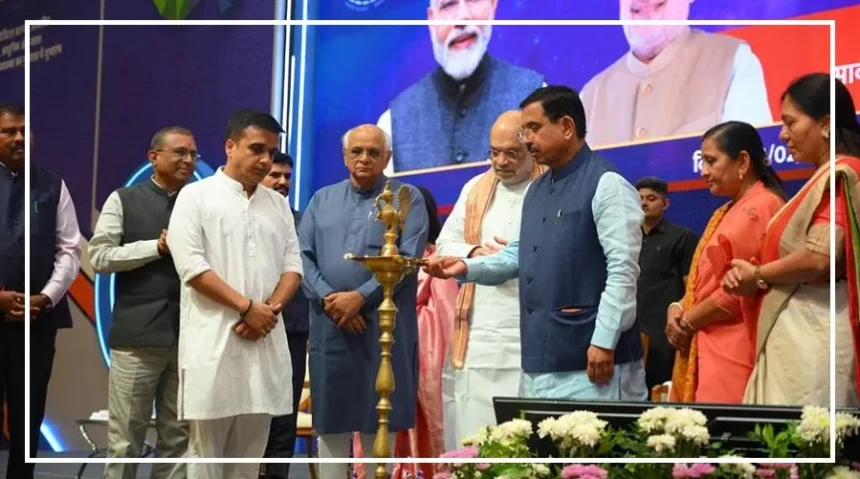
Important news for ration card holders. The Modi government has started a pilot project of Central Bank Digital Currency (CBDC) in the Public Distribution System (PDS) in Gujarat.
Under this plan, beneficiaries will receive digital coupons in the form of “e-Rupee.” These coupons will be sent directly to their digital wallets and can be used only to buy food grains from ration shops.
How the New Digital Ration System Will Work
The government says this system will make ration distribution more transparent and effective. Earlier, subsidies were given in cash or through regular digital transfers.
Now, digital currency will make sure the money is used only for its intended purpose — buying food grains.
Beneficiaries will not be able to withdraw this money or spend it elsewhere. It can be used only at ration shops for purchasing grains. This step is expected to ensure that subsidies reach the right people without misuse.
Experts believe this system will help reduce fraud and leakage. In many cases, subsidy funds are misused or complaints of irregularities are reported.
With digital food currency, the government can directly track how the money is spent. This will also help in better control and monitoring of government expenses.
Part of India’s Digital Economy Push
This move is part of India’s larger digital economy campaign. The country has already introduced systems like e-POS machines and the “One Nation, One Ration Card” scheme to digitize the ration distribution process

. By adding digital currency to the PDS, the government wants to take this transformation a step further.
However, there are some challenges. Many people in rural and remote areas do not have smartphones or stable internet connections.
Digital literacy is also a concern. Some beneficiaries may find it difficult to use digital wallets. In addition, questions are being raised about cybersecurity and data privacy.
Rollout Plan Across States and Union Territories
After Gujarat, Puducherry is set to start using CBDC for free rations this week. Chandigarh and other Union Territories will follow. Under this scheme, the RBI will issue CBDC directly to the e-wallets of people eligible for free rations.
The government plans to expand the scheme across the country over the next three to four years. Analysts say that if successful, India could set a global example in using digital currency for social welfare schemes.
It could make subsidy management more transparent, secure, and efficient.

India’s Position in the Global Context
India’s initiative matches global efforts to deliver welfare benefits digitally, but integrating it with a CBDC makes it unique.
For example, the US Supplemental Nutrition Assistance Program and Brazil’s Bolsa Familia already use electronic benefit transfer systems.
Britain’s Healthy Start scheme also provides nutrition support through prepaid cards.
With the use of digital currency in the ration system, India may become a leader in combining digital finance with public welfare programs.