In the world of television, where ratings decide success, a big change is here.
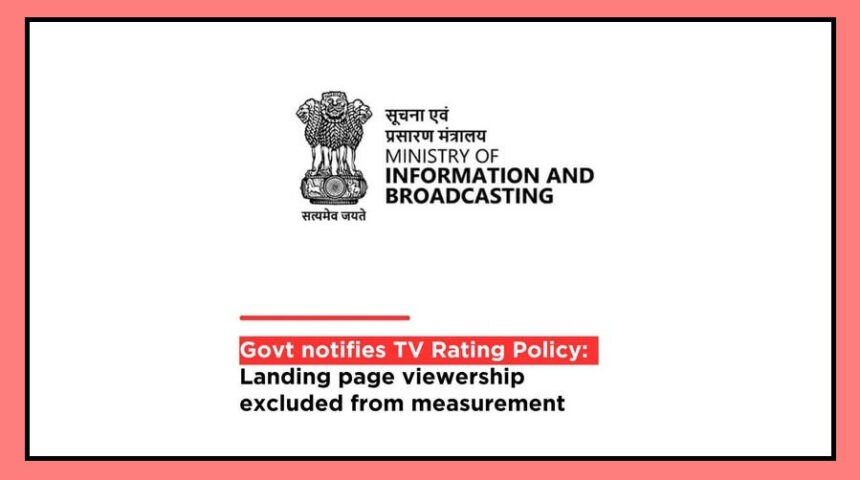
The Ministry of Information and Broadcasting has introduced the TV Rating Policy 2026, aiming to make viewership data more fair, transparent, and reliable.
No More “Landing Page” Boosts
One of the biggest changes is the ban on landing pages in TV ratings.
Earlier, channels used landing pages to artificially increase viewership numbers.
These were promotional screens that counted as views even if people didn’t actually watch the content.
Now, these will no longer be included in ratings.
This means:
Channels can’t inflate numbers using marketing tricks

Real content will matter more than promotions
Ratings will better reflect actual audience interest
The focus is clearly shifting from visibility to quality.
A Big Push for Fair Competition
The new policy also makes it easier for more companies to enter the ratings space.
Net worth requirement reduced from ₹20 crore to ₹5 crore
More rating agencies can now enter the market

This helps reduce monopoly and encourages healthy competition.
To ensure fairness:
At least 50% board members must be independent
Strict rules prevent conflicts of interest
These steps aim to make rating agencies more neutral and trustworthy.
More Accurate and Transparent Data
The policy also improves how data is collected and shared.
Rating agencies must now:
Increase sample size to 80,000 homes, later 1.2 lakh homes
Include data from cable, DTH, OTT, and smart TVs
Share their methods and anonymised data publicly
They must also follow the Digital Personal Data Protection Act, 2023 to protect user privacy.
To maintain accuracy:
Regular internal and external audits will be conducted
Government oversight will ensure compliance
What Industry Experts Are Saying
Arnab Goswami has supported the move, saying it will stop channels from “buying viewership” and encourage real journalism.
According to him, this change will:
Promote fresh talent
Bring focus back to content
Strengthen the role of editors
A Shift Toward Content-Driven TV
The new policy also introduces:
Complaint systems for viewers and stakeholders
Strict penalties for rule violations
Freedom for platforms to publish their own data
All of this points toward a more transparent and competitive TV industry.
What This Means for Viewers
For viewers, this change is simple but important.
It means:
Ratings will reflect what people actually watch
Better content may get more recognition
Less manipulation behind the scenes
In short, the TV Rating Policy 2026 is a step toward honest numbers and better storytelling.
As inflated ratings disappear, success will depend on one thing—content that truly connects with the audience.