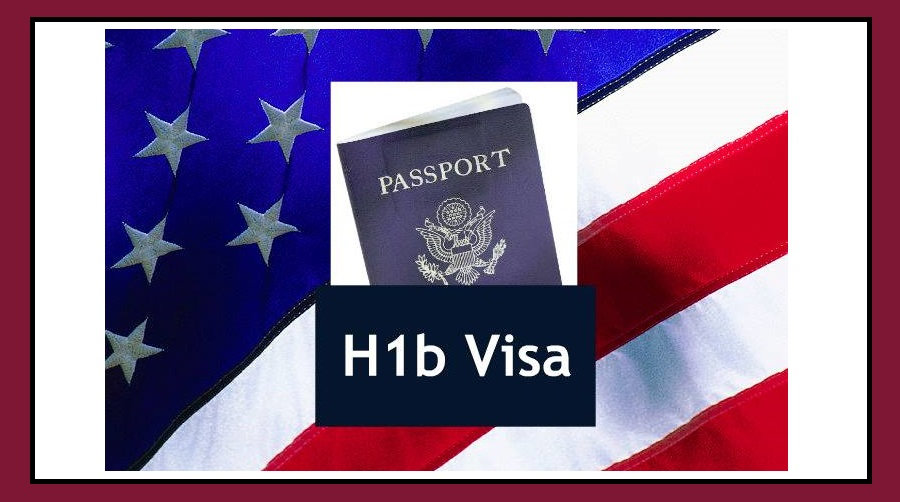
The United States has made important changes to the form used by employers to hire foreign workers on temporary visas.
If you are an employer planning to sponsor a worker — or a professional hoping to work in the US — this update directly affects you.
The U.S. Citizenship and Immigration Services (USCIS) has released a revised version of Form I-129 with a new edition date of 02/27/26.
Here’s what you need to know.
New Form I-129: When Does It Become Mandatory?
On February 27, 2026, U.S. Citizenship and Immigration Services published the updated form.
From April 1, 2026, USCIS will accept only the 02/27/26 edition.
Until March 31, 2026, employers can still use the older 01/20/25 edition.
But there is one important rule:
If USCIS receives the 01/20/25 edition on or before March 31, 2026, it will be accepted.
If it is received on or after April 1, 2026, it will be rejected.
The edition date can be found at the bottom of the form pages and instructions.
Employers must double-check this before filing to avoid rejection.
What Has Changed in the New Version?
The updated form is more detailed and structured.
It adds new compliance language, more data fields, and stronger employer certifications.
In simple terms, USCIS now wants more clarity and accountability.
More Employer Declarations
Employers must now confirm:
They are following fee payment rules
They are not passing certain filing costs to employees
They are complying with labor condition requirements
This change increases employer responsibility and aims to prevent misuse.
Extra Details for H-1B Cases
According to Reddy Neumann Brown PC, the new form requires employers to provide details used to determine the LCA wage level. This includes:
Minimum job requirements
Required degree field
Level of supervision
For H-1B cap cases, employers must also mention the wage level selected during H-1B registration.
This means applications will now face closer review.
More Clarity on Work Locations and Visa Categories
The revised form asks for more detailed information about:
Worksite locations
Different employment arrangements
Beneficiary’s immigration history

Visa classification sections are now better organized to reduce confusion when selecting visa categories.
Although visa types remain the same, the process is becoming stricter and more documentation-heavy.
Who Needs to File Form I-129?
Form I-129 is used by US employers to sponsor temporary nonimmigrant workers.
Before filing this form, certain visa categories require the employer to first obtain labor certification from the US Department of Labor.
After that, the employer files Form I-129 with USCIS.
This form is commonly used for:
H-1B workers
H-2A and H-2B workers
L-1 intracompany transferees
O, P, Q, and R visa categories
It is also used to request:
Extension of stay
Change of status
Switching to visa types like E-1, E-2, E-3, H-1B1, or TN
Important for F-1 Students Moving to H-1B
Form I-129 is also used when international students shift from study status to work status.
If you are an F-1 student and want to move to H-1B status, your employer must sponsor you and file Form I-129 on your behalf.
A timely cap-subject petition is required for H-1B cases.
The updated guidance provides some exemptions for US employers hiring F-1 students under the H-1B program, but the employer still needs to file the proper petition.
What This Means for Employers and Workers
The core visa programs remain unchanged.
However, the paperwork requirements are now stricter.
Employers must be more careful while filling out the form.
Missing details or incorrect edition usage could lead to rejection.
For foreign workers, this means documentation and employer compliance will play an even bigger role in approval chances.
If you are planning to file soon, make sure you use the correct edition and prepare complete supporting documents before April 1, 2026.