In the hustle of daily traffic, the law has drawn a clear boundary for enforcement.
The Telangana High Court has made it explicit: police cannot stop vehicles or coerce motorists into paying pending traffic fines on the road.
Coercion on Roads Is Not Allowed
Justice NV Shravan Kumar, while hearing two writ petitions on Tuesday, emphasized that traffic fines must be collected only through proper legal procedures.
Police personnel have no authority to confiscate vehicle keys or hold motorists to force immediate payments.
The petitions were filed by V. Raghavendra Chary, a resident of Secunderabad, who challenged the practice of Hyderabad Traffic Police stopping vehicles on public roads and insisting that old fines be cleared before motorists could proceed.

The court clarified that while motorists are free to pay fines voluntarily, coercion violates the law.
Under the Motor Vehicles Act, paying a fine is a choice, and authorities must follow statutory procedures, including issuing notices and adjudication by a competent judicial forum.
Due Process, Not Police Discretion
The petition also raised concerns about specific cases, including a fine of Rs 1,200 for triple riding.

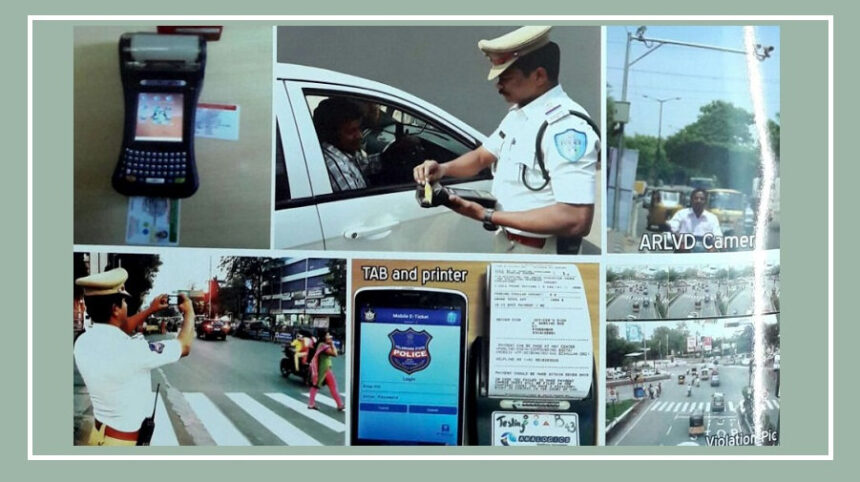
The petitioner argued that the fine was imposed without citing the exact legal provision, and that multiple challans were sometimes generated using personal mobile phone photographs, not certified devices.
Legal counsel highlighted that only government-approved surveillance tools can be used to book traffic offences.
Additionally, the petitioner argued that police officers were deciding fines and collecting money without judicial approval, violating the doctrine of separation of powers.
Only a Judicial Magistrate has the authority to impose punishment.
The court also questioned Government Order No.108 of 2011, stating it may conflict with central laws and fundamental rights.
What This Means for Motorists
The ruling makes it clear that:

Police cannot stop vehicles to collect fines on the spot
Fines must be recovered through lawful processes and judicial oversight
Evidence for fines must come from certified and approved sources
Motorists cannot be coerced or intimidated into paying
This judgment reinforces the principle that even in the busiest streets, the rule of law prevails.