

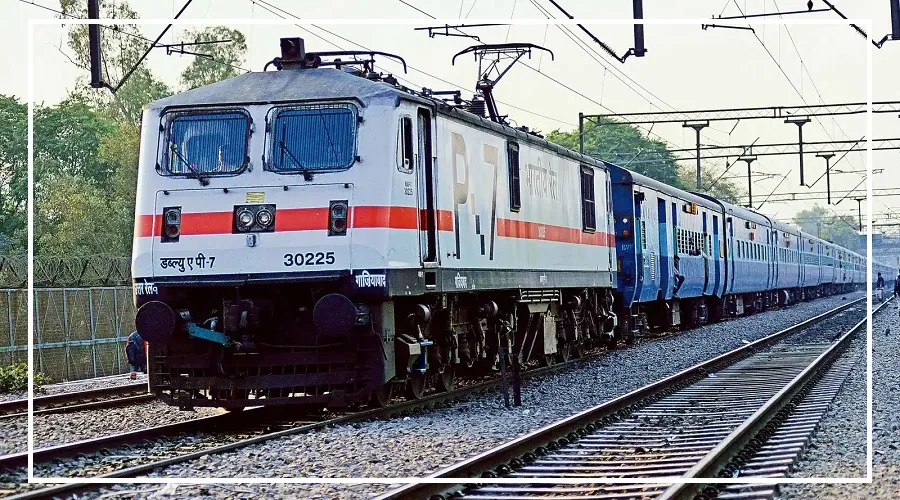
Indian Railways is set to roll out Amrit Bharat II Express trains from January 2026, and with this launch, several important rule changes have been announced.
These updates will affect ticket fares, reservations, quotas, and refunds.
Passengers planning to travel on these trains should be aware of what’s new.
New Fare Rules You Should Know
The Railway Board has clarified that the basic fare remains unchanged, but new minimum distance rules have been introduced.
For sleeper class, passengers will have to pay a minimum fare for 200 km, even if the actual journey is shorter.
This minimum sleeper fare has been fixed at ₹149.
For second class, the minimum fare will be charged for 50 km, which comes to ₹36.
Reservation charges and superfast surcharges will be added separately.
This means a passenger traveling only 100 km in sleeper class will still have to pay the fare for 200 km.
RAC Facility Removed in Sleeper Class
One major change in the Amrit Bharat II Express is the removal of the RAC (Reservation Against Cancellation) facility in sleeper class.
All sleeper berths will now be available for booking right from the start of the advance reservation period.
Passengers will either get a confirmed berth or not get a sleeper ticket at all.
However, unreserved second-class ticket rules will remain the same as before.
Limited Quotas Now Available
Only three types of quotas will be allowed in sleeper class:
Women
Senior citizens
Persons with disabilities
No other quotas will apply to this train.
To improve comfort, Indian Railways has introduced lower berth allocation for elderly passengers and those traveling with children.
The system will automatically try to assign lower berths to men aged 60 years and above and women aged 45 years and above, depending on availability.
Passengers traveling with children who do not have a separate berth will also be given priority for lower berths.
Faster Refunds and Digital Payments
Indian Railways has also updated its refund policy.
Refunds for cancelled tickets will now be processed within 24 hours, making the system quicker and more passenger-friendly.
For reserved tickets, digital payment will be mandatory.
Digital payment will also be preferred at ticket counters.
If digital payment is not possible, refunds will be issued under the existing rules.