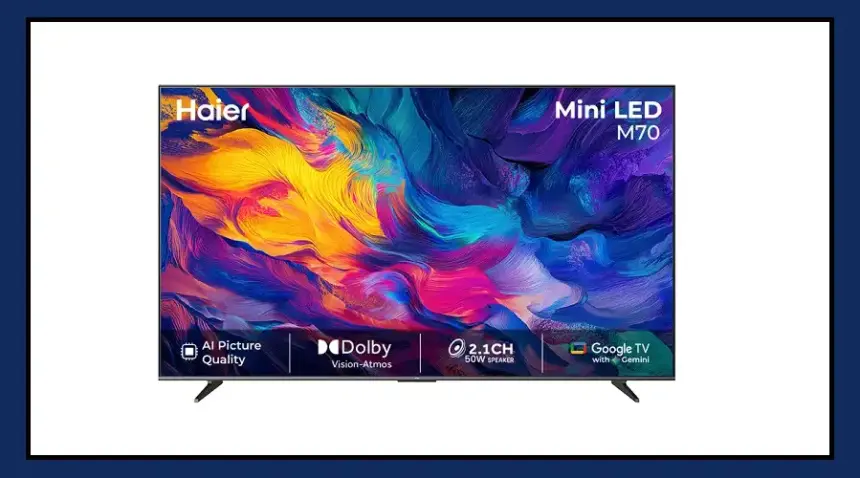
Planning to upgrade your home entertainment setup? Haier has launched its new Mini LED M70 Series smart TVs in India.
The new lineup is available in screen sizes ranging from 43 inches to 85 inches and comes with premium features for better picture quality, powerful sound, and smooth gaming.
The company has packed the TVs with Mini LED technology, AI-powered picture enhancements, Dolby Atmos audio, and support for Google Gemini, making them a strong option for buyers looking for a feature-rich smart TV.
Haier M70 Series Price in India
The new M70 Series is available at the following prices:
65-inch: ₹74,990
75-inch: ₹1,02,990
85-inch: ₹1,69,990
Haier is also offering a 3-year warranty on the new TVs. The M70 Series is available through major retail stores across India.
Better Picture and Powerful Sound
The Haier M70 Series uses Mini LED technology along with Micro Dimming, which adjusts brightness and contrast in different parts of the screen.
This helps deliver deeper blacks, brighter highlights, and improved overall picture quality.
The TVs also include AI-powered features such as AI HDR Enhancer, AI Color Boost, AI Motion, and AI Noise Reduction.
They support both Dolby Vision and HDR10+, while the 93% DCI-P3 color gamut helps produce rich and vibrant colors.
For audio, the TVs feature a 50W 2.1-channel speaker system with a built-in subwoofer. Support for Dolby Atmos
and Total Sonics technology is designed to provide clearer dialogue, stronger bass, and a more immersive sound experience.
Gaming and Smart Features
Gamers get several useful features, including 120Hz Gaming (DLG), Variable Refresh Rate (VRR), Auto Low Latency Mode (ALLM), and MEMC for smoother gameplay.
The Haier M70 Series runs on the Google TV platform, giving users easy access to popular OTT apps and content.
It also supports Google Gemini, allowing users to enjoy AI-powered features.
In addition, Hands-Free Voice Control lets users search content, open apps, and adjust the volume using voice commands without needing the remote.