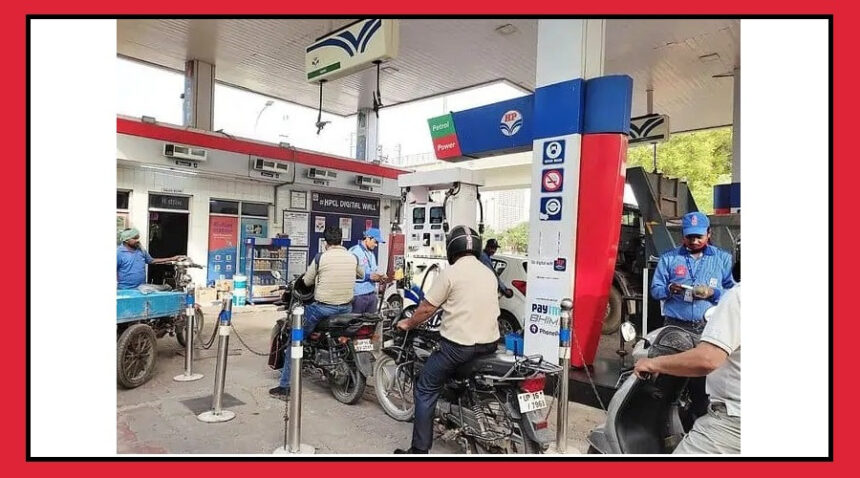
The Central Government has defended India’s Ethanol Blended Petrol (EBP) Programme, saying petrol prices could have climbed to around ₹125 per litre in Delhi if ethanol had not been mixed with petrol during the period of high global crude oil prices.
According to the Ministry of Petroleum and Natural Gas, ethanol blending helped reduce India’s dependence on imported crude oil and protected consumers from a much sharper rise in fuel prices.
The statement comes as discussions around E20 petrol continue, with many people questioning its impact on vehicles and fuel efficiency.
How Ethanol Blending Helped Keep Petrol Prices Lower
The government says ethanol, which is produced in India, replaces a portion of imported crude oil used to make petrol.
When global crude oil prices rose to around $135 per barrel, this reduced the country’s import bill and helped keep petrol prices under control.
Officials claim that without the ethanol blending programme, petrol prices in Delhi could have reached nearly ₹125 per litre during that period.
They also say the programme has improved India’s energy security by reducing dependence on foreign oil.
Government Responds to Concerns About E20 Petrol
The government has rejected several concerns raised about E20 fuel, including claims that it causes major engine damage, significantly reduces mileage, affects food security, or puts an extra financial burden on taxpayers.
According to the ministry, E20 petrol has gone through extensive testing and has been approved by vehicle manufacturers.
Officials say there is no evidence of widespread engine failures caused by E20 fuel.
The government also said that while some older vehicles may see a slight drop in fuel efficiency, the impact is generally small and is balanced by cleaner combustion, lower emissions, and better engine performance.
No Plan to Increase Ethanol Blending Beyond 20%
The Centre has clarified that there is currently no proposal to increase ethanol blending beyond the existing 20% level.
Officials say any future decision will be based on scientific studies and careful evaluation rather than being implemented immediately.
Benefits Go Beyond Lower Petrol Prices
According to the government, the ethanol blending programme offers several long-term benefits apart from helping control fuel prices.
It has reduced India’s crude oil imports, helped save foreign exchange, increased income opportunities for farmers involved in ethanol production, and lowered carbon emissions.
With India already achieving its 20% ethanol blending target, the government’s focus is now on improving the programme’s efficiency while continuing to study its long-term impact.
Key Takeaway
The government believes ethanol blending has played an important role in keeping petrol prices lower during periods of high crude oil prices.
While debates over E20 petrol continue, officials maintain that the programme has strengthened India’s energy security, supported farmers, and reduced emissions without causing widespread problems for vehicle owners.