


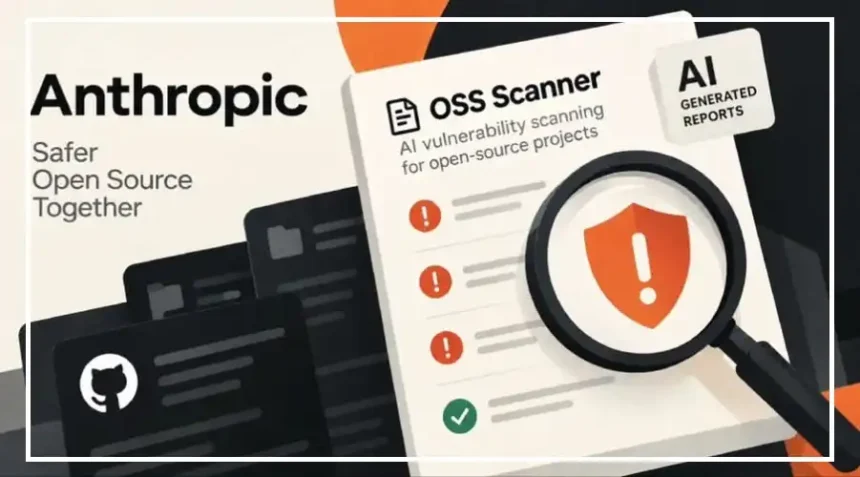
Claude OSS Scanner is a new free AI-powered security service from Anthropic designed to help open-source developers identify software vulnerabilities before attackers can exploit them.
Announced on October 8, 2026, the opt-in service uses the company’s advanced AI models, including Claude Mythos, to conduct periodic security scans and generate reports for eligible projects.
The initiative could help open-source maintainers improve software security without paying for these scans.
However, the reports are generated entirely by AI and do not undergo human review before delivery, meaning developers must verify findings rather than automatically treating every alert as a confirmed vulnerability.
How Claude OSS Scanner Works
The scanner examines participating repositories for potential security weaknesses and produces reports explaining the identified issues.
Depending on the finding, a report may include a reproducible example, an explanation of the vulnerability, information about when the bug was introduced and a suggested patch when available.
Unlike conventional security programmes that rely on experts to review findings before they reach developers, OSS Scanner delivers AI-generated reports without human triage.
This approach is intended to make security checks more frequent, but it also means maintainers need to assess the evidence, reproduce the issue and determine whether a fix is necessary.
How Open-Source Projects Can Apply
Participation is optional, and projects must be accepted by Anthropic.
Core maintainers can apply by submitting a pull request to the OSS Scanner GitHub repository along with a YAML configuration file containing the required project information.
The configuration must include the repository link, an email address for the primary contact and a repository-relative path to a Dockerfile.
The Dockerfile should prepare the build environment, install dependencies and build the project so that the security analysis can be performed offline.
Anthropic says project selection will follow criteria similar to Google’s OSS-Fuzz programme, with decisions made according to the project’s importance to infrastructure and user security.
Not every open-source repository is guaranteed acceptance.
What Anthropic’s AI Security Research Reveals
The new service builds on Anthropic’s Project Glasswing security research, which uses advanced AI models to identify weaknesses in important software.
The company reported that its earlier work had generated hundreds of vulnerability reports during testing with dozens of open-source projects.
Some findings involved vulnerabilities that could be combined into attacks allowing remote code execution without authentication.
These developments demonstrate the potential of AI to assist software security teams, particularly when maintainers have limited resources.
However, identifying a possible vulnerability is only one step in the process; developers must still assess its severity, verify the report and release appropriate fixes.
Why Free AI Security Scanning Matters
Open-source software supports a large part of the digital ecosystem, including applications, websites and critical infrastructure.
Smaller projects may not have dedicated security teams or sufficient budgets for frequent professional audits, making free scanning services a potentially useful additional resource.
Claude OSS Scanner Offers Free AI Security Checks to eligible projects, but its findings should complement rather than replace established security testing and human review.
The practical value of the service will depend on the accuracy of its reports, the ability of maintainers to act on them and the timely release of fixes.