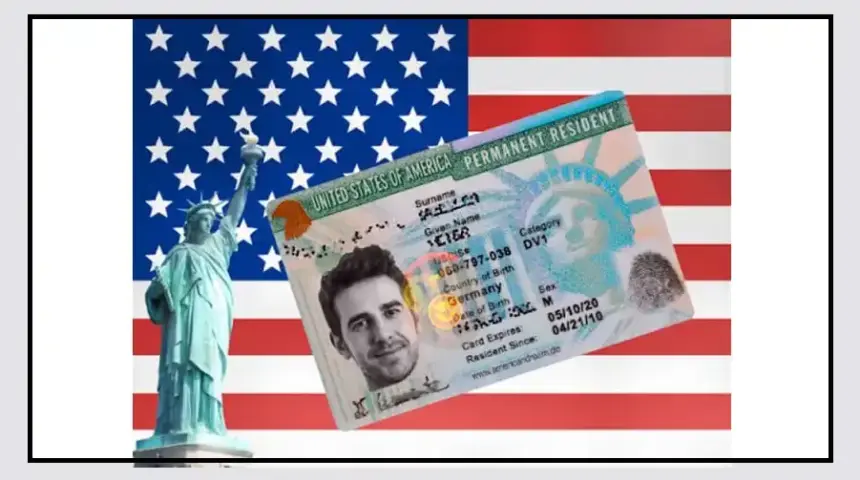
Green Card Rules Change for US Applicants from September 18, 2026, as the US Citizenship and Immigration Services (USCIS) begins applying updated guidance on the “public charge” test.
The change affects how certain applicants may be assessed for possible dependence on government assistance.
The updated guidance applies to adjustment of status applications filed through Form I-485 on or after September 18. Applicants will also need to use the updated version of the form, as older versions will no longer be accepted.
Green Card Rules Change for Public Charge Test
Under the updated guidance, USCIS officers will take a broader look at an applicant’s circumstances when assessing public charge ineligibility.
The review can consider age, health, family status, financial resources and assets, education and skills.
The assessment is based on the totality of the circumstances rather than one single factor. Where applicable, officers may also consider an Affidavit of Support and evidence related to the use of government benefits.
The updated approach also expands the types of government assistance that may be considered.
Benefits based on income or financial need, including food assistance, housing assistance and Medicaid, can be considered under the new guidance.
Cash assistance for income maintenance and long-term institutional care funded by the government can also be relevant to the assessment.
Which Applications Are Covered
The updated guidance covers people applying for green cards through family-based, employment-based and diversity visa categories, including applicants adjusting their status inside the US and certain people applying for immigrant visas from abroad.
The rules can also apply to certain Temporary Protected Status holders who later seek a family-based green card.
The public charge assessment does not apply to them simply because they hold TPS, but it may become relevant when they later apply for permanent residence through a family petition.
Lawful permanent residents who remain outside the US for more than 180 days may also face public charge considerations when they seek admission again as returning residents. Certain special non-immigrant visa applicants and religious applicants are also covered.
Which Applicants Are Exempt
Several categories remain outside the public charge rule. These include US citizens, refugees and asylees applying through those special categories, and Special Immigrant Juveniles.
T non-immigrant visa holders who are victims of human trafficking and U non-immigrant visa holders who are victims of certain crimes are also exempt.
Certain applicants under the Violence Against Women Act and Cuban Adjustment Act are likewise excluded.
The exemption also covers existing green card holders who are simply renewing their status, people applying for US citizenship, and TPS applicants and re-registrants.
Filing Date Will Determine Which Rule Applies
The filing date is important because different versions of the public charge guidance can apply to different cases. Applications filed on or after September 18, 2026, come under the new 2026 guidance.
Applications filed between December 23, 2022, and September 17, 2026, continue to be assessed under the 2022 guidance, even if USCIS makes its decision after September 18.
Cases filed before December 23, 2022, remain subject to the earlier 1999 Interim Field Guidance. This means the rules applicable to a case can depend on when the application was filed rather than when USCIS reaches its decision.
For applicants affected by the public charge assessment, the change makes financial resources, family circumstances, education, skills and other factors part of a broader review of their overall situation.