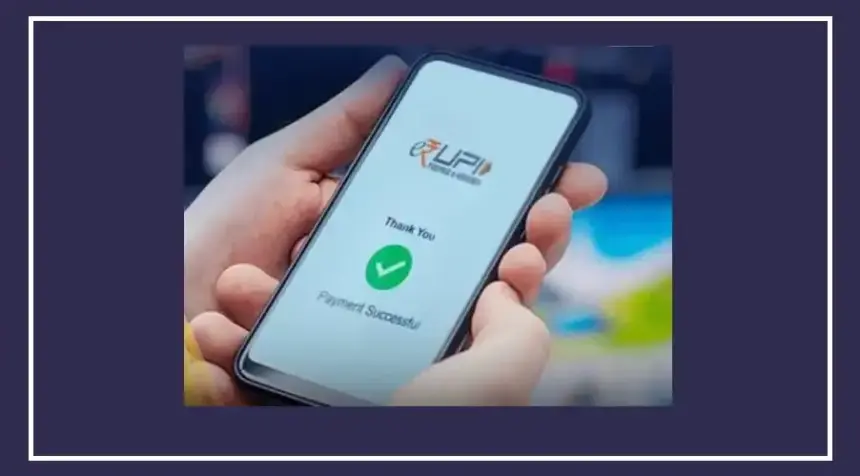
UPI Tap and Pay lets users make payments by simply unlocking an NFC-enabled smartphone and tapping it on an NFC-enabled point of sale (POS) terminal.
The feature was launched on the second day of the Global Fintech Fest in Mumbai.
The new payment option means users will not need to enter their UPI ID or scan a QR code for every transaction. RBI Governor Sanjay Malhotra inaugurated the feature at the event.
UPI Tap and Pay makes payments easier
According to NPCI, the organisation that operates UPI, the tap and pay feature is designed to work even in areas with low or no internet connectivity.
To make a payment, users need to unlock their NFC-enabled smartphone and bring it close to a compatible POS machine. The payment can then be completed without manually entering a UPI ID or scanning a QR code.
The feature is being introduced as a standard UPI payment option. This means users of different UPI apps, including PhonePe, Google Pay, BHIM and Paytm, can have access to tap and pay functionality.
Users also do not need to open their UPI app to make a payment through this method. They can simply unlock their smartphone and tap it on the POS terminal.
UPI Tap and Pay across UPI apps
Tap-and-pay payments are not entirely new in India. Smartphone makers and apps such as Google Pay already offer similar functionality, while Apple Pay also supports tap-and-pay payments.
However, the new UPI feature brings the payment method into the broader UPI ecosystem. This could make contactless payments more convenient for users who have NFC-enabled smartphones and compatible POS terminals.
NPCI is the primary organisation responsible for operating retail payment and settlement systems in India. It was established by the Reserve Bank of India and the Indian Banks’ Association.
The launch comes as digital payments continue to expand in India, with UPI becoming a widely used system for everyday transactions.
SEBI launches Demat 2.0 pilot
The Global Fintech Fest also saw the launch of Demat 2.0, a pilot project announced by the Securities and Exchange Board of India (SEBI) for the tokenisation of corporate bonds.
The announcement was made jointly by RBI Governor Sanjay Malhotra and SEBI Chairman Tuhin Kant Pandey at the event.
The project is linked to the RBI’s wholesale central bank digital currency (CBDC) through the Unified Market Interface (UMI).
Tokenisation involves converting ownership of traditional corporate bonds recorded through paper or digital ledger systems into digital tokens using blockchain technology.
Demat 2.0 is intended to provide a modern technological method for issuing, selling and managing existing corporate bonds. It is not a new investment product, but a technology-based approach to handling existing bonds.
The pilot project is expected to explore how tokenised corporate bonds can support faster and more streamlined transactions.