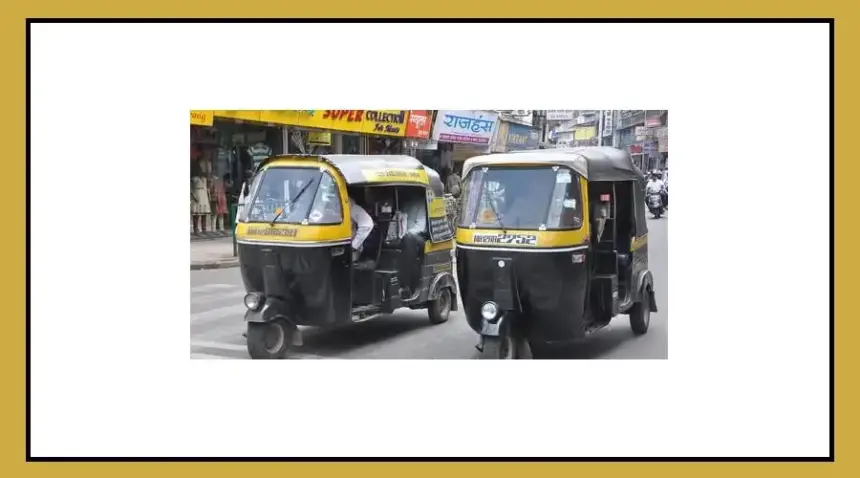
Taxi and auto-rickshaw drivers in Maharashtra have received another year to learn Marathi after protests over the state’s new language requirement.
The government had started testing drivers on their ability to hold basic conversations in Marathi from August 20.
Drivers who failed the test were initially given just one month to improve their language skills. They could also face licence suspension or cancellation.
Now, the government has extended the deadline by one full year, giving drivers more time to meet the requirement.
Why Has Maharashtra Introduced the Marathi Test?
The Maharashtra government says the rule is aimed at making communication between drivers and passengers easier and improving passenger safety.
However, drivers are not required to read or write Marathi or speak it fluently.
They only need a basic “working knowledge” of the language so they can handle common conversations related to their work.
Training has been arranged to teach practical phrases, such as asking passengers where they want to go, discussing fares and giving directions.
Nearly 9.79 Lakh Permits Are Affected
The scale of the rule is significant.
Maharashtra has nearly 9.79 lakh valid taxi and auto-rickshaw permits, with almost half of them located in the Mumbai metropolitan region.
Many drivers have moved to Maharashtra from other parts of India, particularly from Hindi-speaking states such as Uttar Pradesh and Bihar.
According to the state transport department, around 1.66 lakh drivers have already completed training and passed the oral Marathi test.
Why Did Drivers Ask for More Time?
Drivers’ unions argued that the original deadline was too short and could affect their livelihoods.
Many drivers spend most of their day on the road. Attending language classes for several hours could mean losing valuable working time and daily income.
The additional year has therefore provided some relief.
Drivers have said they are willing to learn Marathi but want enough time to do it without putting their earnings at risk.
The Bigger Debate Over Language and Migration
The issue has also brought Maharashtra’s long-running debate over language, migration and employment back into focus.
Maharashtra became a Marathi-speaking state in 1960, while Mumbai has continued to attract workers from across India because of its importance as the country’s financial and business centre.
As a result, language has often been linked with questions about employment and the rights of migrants.
Political movements such as Shiv Sena and Maharashtra Navnirman Sena (MNS) have historically made Marathi identity an important part of their politics.
What Happens Next?
The extra year gives drivers more breathing room, but the Marathi requirement has not been removed.
Maharashtra Transport Minister Pratap Sarnaik has said drivers will be expected to learn the language during this additional period and that there will be no further extension.
For now, drivers have more time. But once the new deadline arrives, they will still need to demonstrate enough Marathi knowledge to remain eligible under the rules.