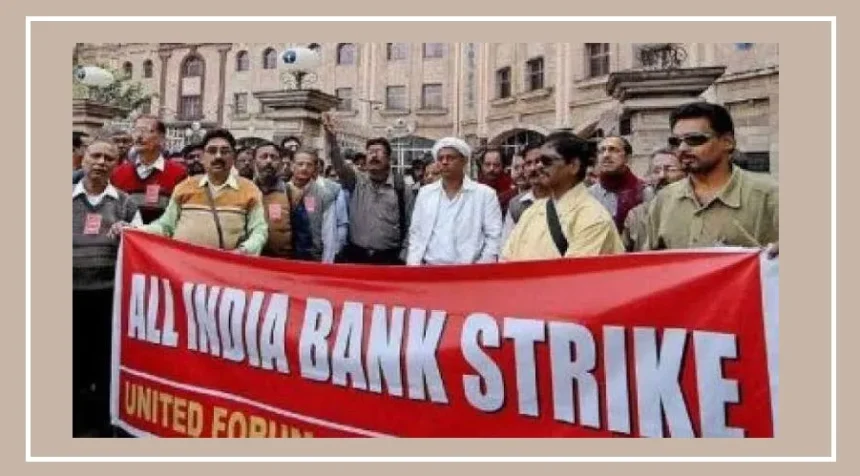
Bank customers may face disruption in services next month as the United Forum of Bank Unions (UFBU) has announced a nationwide strike.
The UFBU, which represents nine major bank employees’ and officers’ unions, says the decision has been taken over the government’s stand on key employee demands.
The unions are demanding the introduction of a five-day work week and the withdrawal of the revised Performance-Linked Incentive (PLI) scheme.
Bank Strike Dates You Should Know
The first nationwide bank strike is scheduled for September 11, 2026. Since it falls on a Friday, banking services could remain affected for up to three or four days when combined with the weekend holidays.
The UFBU has also announced a three-day nationwide strike from September 28 to September 30, 2026. These dates coincide with banks’ half-yearly closing period, making the disruption more significant.
The unions have further warned that if their demands are not accepted, they will begin an indefinite nationwide strike from October 26, 2026.
Why Are Bank Unions Protesting?
The biggest demand of the unions is the implementation of a five-day banking week. They are also opposing the government’s revised Performance-Linked Incentive (PLI) scheme.
According to the UFBU, the new PLI policy gives much higher incentives to senior officers in Scale IV and above, while clerks and junior employees receive a much smaller incentive.
The unions argue that this creates an unfair gap between employees.
They claim that most bank staff are eligible for an incentive of up to 15 days’ basic pay plus dearness allowance, whereas senior officers can receive incentives worth up to 365 days’ basic pay.
Talks Still Underway
The dispute is currently being discussed before the Chief Labour Commissioner, while the matter is also pending in the Delhi High Court.
The UFBU has asked the government to put the revised PLI scheme on hold and hold discussions with employee unions before making any changes.