

PNG Drive 3.0 starts across India on October 1, 2026, with the government targeting 20,000 new piped natural gas connections or conversions every day.
The initiative aims to speed up the shift from LPG cylinders to PNG in households and other users.
The latest drive builds on earlier efforts to expand PNG adoption.
The government has been pushing faster network expansion and easier access to piped cooking gas as part of its broader effort to increase domestic PNG use.
PNG Drive 3.0 Targets 20,000 Connections Daily
PNG Drive 3.0 targets a daily pace of 20,000 PNG connections and conversions.
Reports indicate that more than 10,000 connections or conversions were already being completed each day, with the new campaign aiming to double that pace.
The Petroleum and Natural Gas Regulatory Board has identified 80 new geographical areas for the drive.
The focus is on expanding pipeline infrastructure and increasing the number of households that can access PNG.
A unified digital portal is also being developed to make the process easier for consumers.
The platform is intended to bring connection applications and complaint-related services together in one place.
How PNG Drive 3.0 Can Affect Households
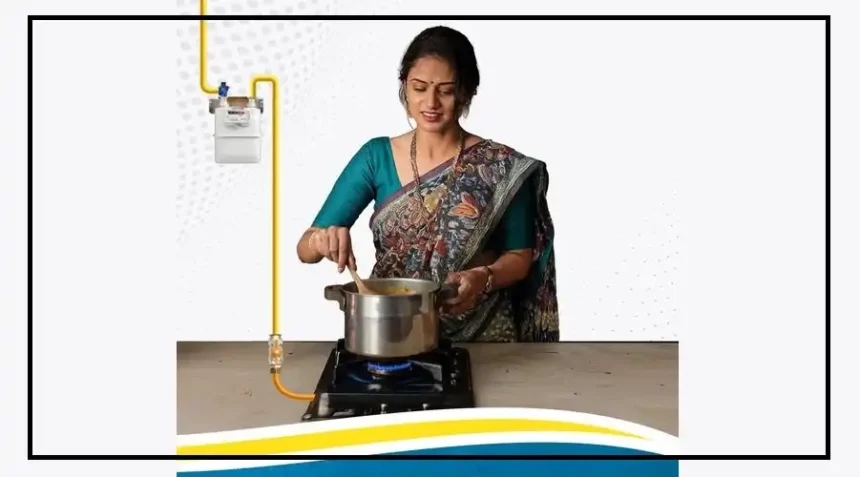
For households with access to a PNG network, the shift can remove the need to regularly book, store and replace LPG cylinders.
PNG is supplied through a pipeline, while consumers are billed according to their metered consumption.
PNG can also provide a continuous supply, eliminating dependence on cylinder delivery schedules.
The government says piped gas is supplied through underground pipelines at low pressure, while its lighter-than-air nature allows leaked gas to disperse more quickly.
Another difference is the way households pay for the fuel.
Instead of purchasing a cylinder at a time, PNG users pay for the quantity of gas recorded through their meter, similar to other metered utility services.
Government Pushes PNG Connections Across India
The latest campaign follows an incentive scheme approved by the government in August 2026.
The scheme, effective from September 1, is designed to encourage city gas distribution companies to activate unbilled PNG connections and expand networks into new areas.
Under the scheme, eligible city gas distribution entities can receive an additional allocation of 200 Standard Cubic Metres of domestically produced APM gas for each qualifying incremental billed domestic PNG connection above the threshold fixed for a geographical area.
The government has said the incentive can reduce the payback period for investment in domestic PNG connections from around 10 years to approximately three years.
This is intended to give gas distribution companies a stronger commercial incentive to expand household connectivity.
What Households Should Know Before Switching
PNG availability depends on whether a pipeline network has reached a particular locality and whether the connection is technically feasible.
A registration or application does not automatically guarantee that a connection will be approved.
The government is also developing a unified PNG registration platform where consumers can apply for a connection, check availability and track applications.
The portal says applications are forwarded to the authorised gas operator for verification and further processing.
For households located in areas with an operational PNG network, the expansion drive could make the process of obtaining a connection more accessible.
For others, the main benefit will depend on how quickly pipeline infrastructure reaches their locality.