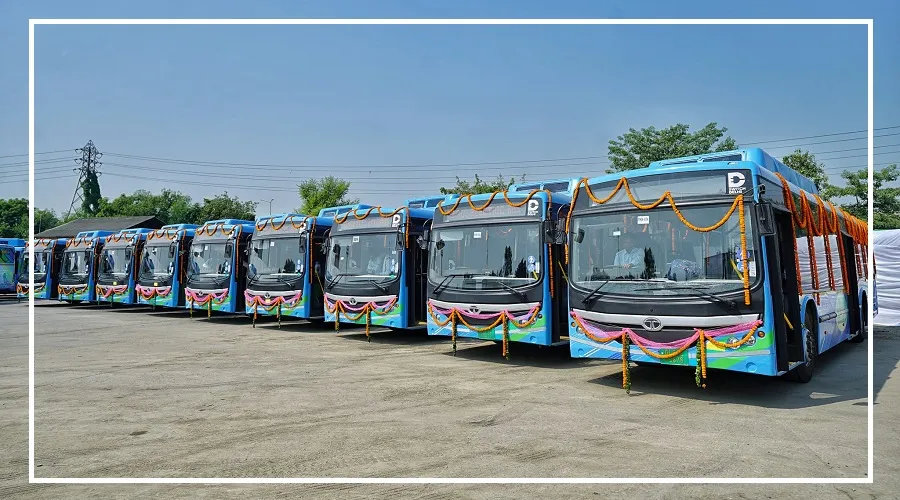
The Central Government is planning a ₹12,000 crore incentive scheme to encourage private companies to add more electric buses to their fleets.
The move is expected to speed up the adoption of clean public transport, reduce pollution, and cut India’s dependence on fossil fuels.
Unlike earlier schemes that mainly supported government transport corporations, the new proposal focuses on private fleet operators, who run a large share of the country’s bus services.
What Will the New Scheme Offer?
According to reports, the proposed scheme may include several financial benefits to make electric buses more affordable.
Some of the incentives being considered are:
Interest subsidies on loans
Capital support for purchasing electric buses
Credit guarantees to help operators get loans more easily
Toll fee waivers
Exemption from vehicle registration charges
The government wants to reduce the biggest hurdle in buying electric buses—their high upfront cost compared to diesel buses.
Target of 50,000 Electric Buses
The government is reportedly aiming to support the deployment of 50,000 electric buses over the next 10 years.
Officials believe the scheme could attract ₹70,000 crore to ₹80,000 crore in private investment.
This would not only expand electric public transport but also boost India’s EV manufacturing and related industries.
School bus operators, employee transport providers, intercity bus services, and contract carriage operators are expected to benefit the most from the scheme.
How Will the Incentives Help?
One of the key proposals is to reduce loan interest rates for buyers of electric buses by 3% to 5% through interest subsidies.
The government is also considering partial credit guarantees to encourage banks and financial institutions to lend more to EV fleet operators.
These measures are expected to lower financing costs and make electric buses a more practical and profitable option for private businesses.
Part of India’s Bigger EV Plan
The proposed scheme will complement existing government initiatives such as the PM e-Bus Sewa and PM E-DRIVE programmes, which aim to increase electric vehicle adoption across the country.
The PM e-Bus Sewa scheme alone targets the deployment of 10,000 electric buses in cities through public-private partnerships.
With India’s electric bus numbers still much lower than many other countries, the government sees significant room for growth in this sector.
Benefits Beyond Cleaner Transport
Increasing the number of electric buses will do more than just reduce pollution.
The move can help lower fuel imports, improve air quality in cities, create new jobs, and support the growth of domestic EV manufacturers, battery makers, and charging infrastructure companies.
Industry experts believe the scheme could play a major role in transforming India’s public transport system while helping the country achieve its long-term climate and sustainability goals.
A Major Push for Green Mobility
If approved, the ₹12,000 crore proposal will become one of India’s biggest support schemes for electric commercial vehicles.
By encouraging private operators to switch to electric buses, the government hopes to attract large private investments and accelerate the country’s transition to cleaner, more efficient, and sustainable transportation.